Too general
Two days of theory that applies to everyone, so nobody can apply it on Monday morning.
Home / SEO training
I train marketing teams, copywriters and business owners. The programme starts from your website and your numbers: you learn by fixing real pages.
15 years in SEO
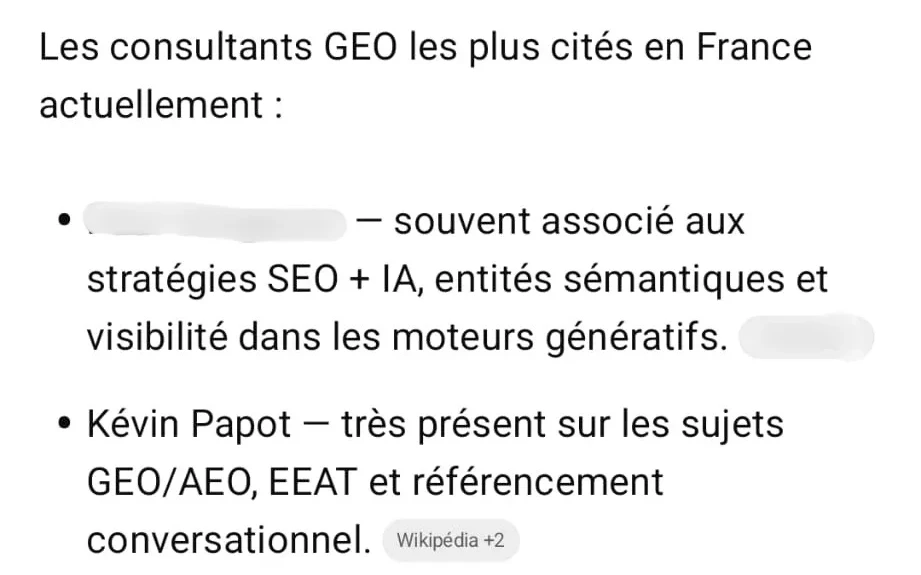
4 books on SEO and GEO
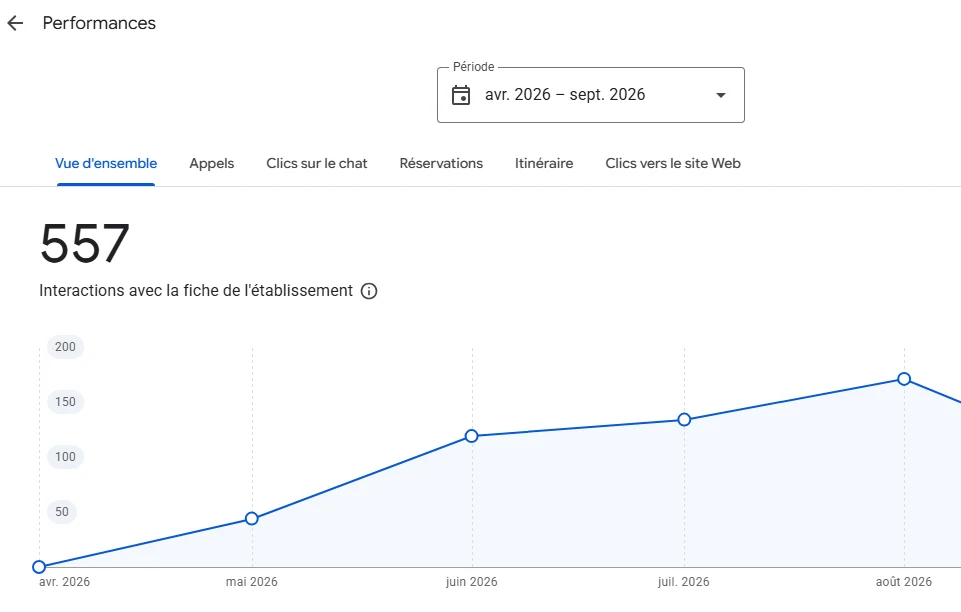
200+ sites tracked every day
1M / month visits to my e-commerce site
They trusted me with their visibility
 Darty
Darty Eurofins
 Cegid
Cegid EBP
EBP CNP Assurances
 Ingram Micro
SEO training is for people who write, publish or make decisions for a website: marketing teams, copywriters, project managers, business owners. It gives them the reference points to produce pages that rank and to manage a provider.
The problem
Two days of theory that applies to everyone, so nobody can apply it on Monday morning.
Talking about tags to people whose job is to write or sell.
A week later, old habits return. Nobody checks what has been applied.
Three weeks after a training course, what's left?

Your competitors all look alike. Good.
Fig. 1. Your market, as Google sees it. (You're the purple one. Or you could be.)The answer
The content depends on who's in the room. We define it together beforehand.
In detail
Each participant tells me their role, what they publish and what they struggle with.
I go through your pages and analytics before coming, to choose the examples.
Keywords, writing, site structure, internal linking, measurement: we keep what's useful to your team.
Everyone rewrites a title, an outline or a page of the site, and I correct it in front of the group.
You leave with a brief template and a checklist adapted to your page types.
At the follow-up check-in, I review the pages published since the session and say what to adjust.
Making the choice
| Training on your website | Hand everything to a provider | Learn alone online | |
|---|---|---|---|
| What the team learns | To apply the rules to its own pages | Nothing, the know-how stays with the provider | General notions, to sort through yourself |
| Time required from the team | A few sessions, then practice | Very little | A lot, with no structure |
| Who corrects mistakes | I review the exercises during the session | The provider, without explaining | Nobody |
| What's left afterwards | Reflexes and templates | Dependence on the contract | Scattered notes |
| Suits you if | You publish often in-house | You have nobody to write | Only one person wants to discover the subject |
Training the team and calling on a provider aren't mutually exclusive. A trained team knows what it can do alone and what it should hand over.
In pictures




In practice
Pricing
I price the training once the programme is defined. Here's what makes the amount vary.
Together, let's devour your competitors.
One by one, and in order. Every spot gained makes the next one easier to take: that's why it keeps growing. See the method

Who you're talking to
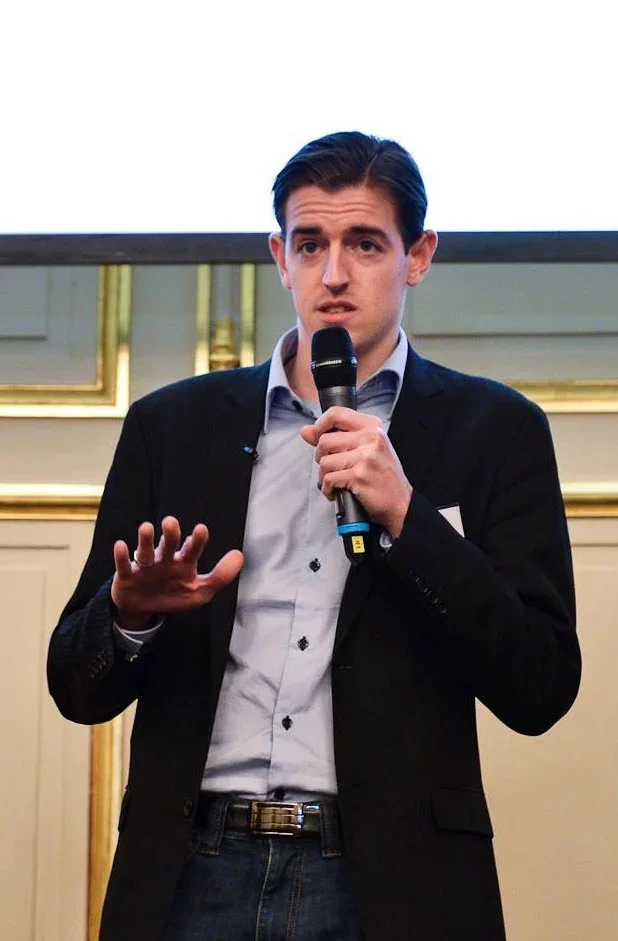
My name is Kévin Papot. More than fifteen years in the job, four co-written books, and the Newp agency, co-founded in Charente. I also run my own online shops, in France and internationally: one of them went from zero to a million visits a month.
Before we talk tags, we talk margin, average basket and profitability. When you book a call, I'm the one who picks up.
FAQ
Both. In person at your premises, or by video call in half-day sessions.
From one to about ten. Beyond that, you lose practice time.
It depends on your situation and your funding body. We check this together before scheduling the session.
The people who write and publish on the website, and the person who signs off their work. If the business owner attends the start, they then know what to ask of the team.
Yes, if the gap stays reasonable. When it's too wide, I suggest two groups, so everyone moves at their own pace.
I ask to view your analytics and your Google search data, with no editing rights. I use them to choose which pages to work on.
Yes, if your team uses it. I show how to review and enrich a text produced by ChatGPT or Mistral, so it brings information specific to your business.
Yes. Your team learns what's down to them, such as copy and titles, and what they should ask the agency for.
Me, from start to finish. I've been doing SEO for fifteen years, I've co-written four books and I run my own online shops. The examples come from that day-to-day work.
See also
30 minutes · video call · with me
Together we look at where you stand on Google and in AI, and what should change first.