html SEO consultant for carpenters: roof frames, timber frame
Kévin Papot Book a call

Home / Industries / Carpentry and timber construction

SEO for carpenters: get enquiries for timber projects in your area.

A timber extension or a roof frame to repair is a big budget for a family. Before calling, they look at finished projects, compare techniques and look for a business near home. The top results are often taken by national builders and quote sites. I work on your website and your Google Business Profile so that your workshop and your jobs are visible at that exact moment.

  1. Rattle your competitors.
  2. Overtake them.
  3. Protect you from their attacks.
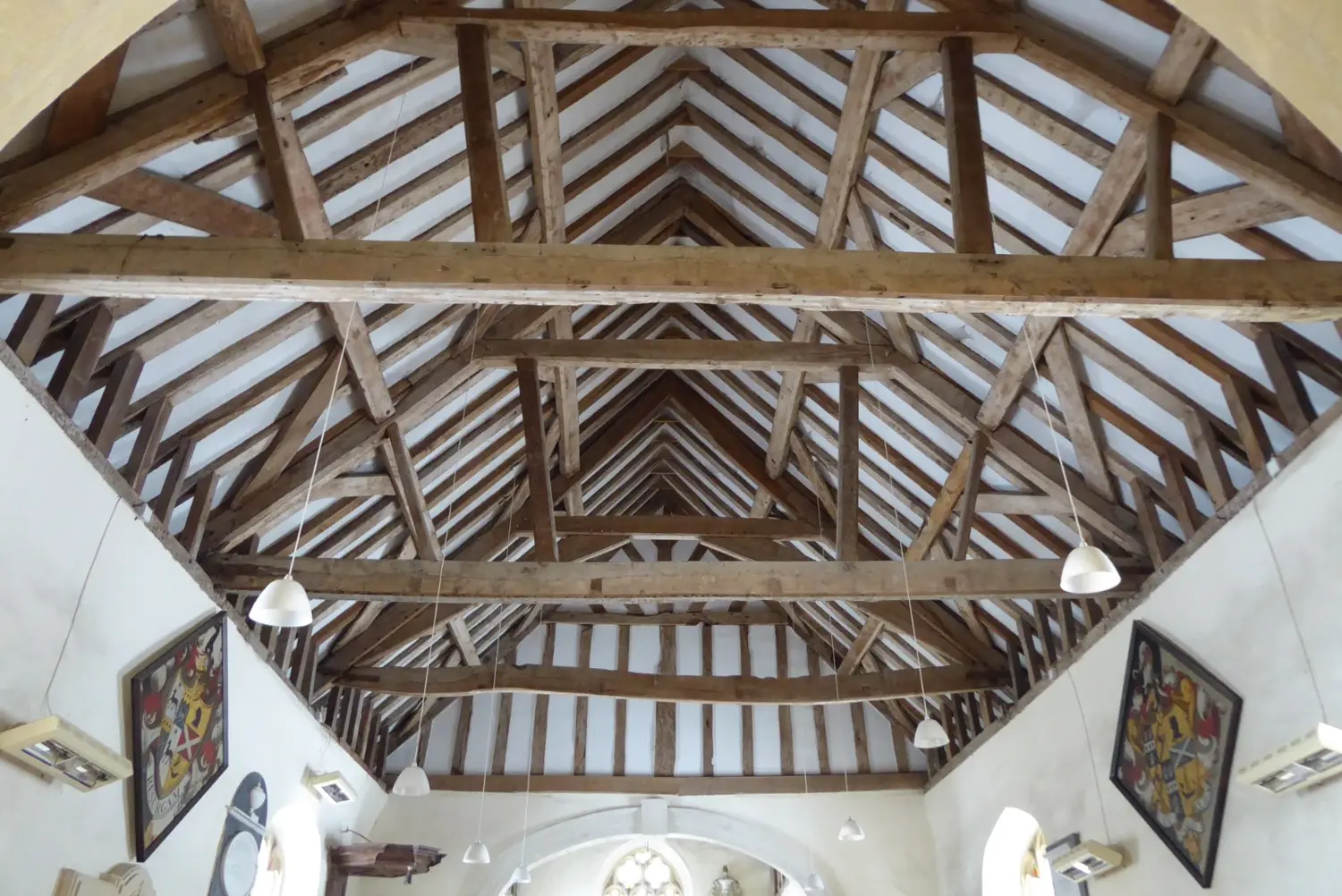
An exposed roof frame
An exposed roof frame. Photo: Philip Halling, CC BY-SA 2.0, via Wikimedia Commons

15 years in SEO

4 books on SEO and GEO

200+ sites tracked every day

1M / month visits to my e-commerce site

They trusted me with their visibility

ibisDartyIxinaEurofinsBUTCegidMarie Claire InternationalEBPFauchon HospitalityCNP AssurancesÉditions Michel LafonIngram Micro
The detail of this page

A title that talks about passion, not extensions

A family in Cognac is looking for someone to build them a timber extension. Your site comes up third, with the title “Home” and a sentence about a passion for wood. The two lines above announce models and quotes. Fix these two texts so they talk about your workshop.

timber extension cognac
  1. A national builder · timber-homes.exampleTimber extension: our models and pricesDownload the catalogue. An adviser will call you back.
  2. A quote site · extension-quotes.exampleHouse extension: get three quotesDescribe your project. Businesses will contact you.
  3. Youyour-carpentry.exampleHome | Carpentry Roofing Zinc WorkTimber-frame extension in Cognac: designed and built by a local carpenterWood, our passion. Careful work for all your projects for many years.On-site survey, made in the workshop, lifted into place and joined to the house. Recent extensions to see around Cognac.
Position 3. Your title contains neither “extension” nor “Cognac”.

Fig. 1. Three results for a timber extension in Cognac. Only one cuts its timbers in the department. (Your workshop was twenty minutes away. The title just said “Home”.)

What this means for you. I rewrite the title and description of each page so they name the structure, the area and what the workshop makes itself.

What is SEO for a carpenter?

SEO for a carpenter is the work that makes a carpentry firm show up on Google when a homeowner in its area is planning a timber extension, an extra storey, a timber-frame house or the repair of an old roof frame. It relies on one page per type of structure, on jobs described with their town and photos, and on a complete Google Business Profile. Its effect is measured by the quote requests that match your skills.

The problem

What holds carpenters back on Google.

Symptom 1

National builders ahead of you

The timber construction market is contested. Timber home builders, extension kit sellers and quote sites publish pages for every department. On a general search, they rank ahead of a five-person workshop. On your area and your real structures, you have what it takes to answer them.

Symptom 2

People confuse you with the roofer

Many homeowners don't know the difference between carpentry and roofing. They type “roof” when they have a timber problem. If your site doesn't clearly name your structures, Google files you in a category that isn't yours and you get calls about tiles.

Symptom 3

Your jobs aren't visible anywhere

A roof frame disappears under the roofing within days. Without a photo taken at the right moment, there's no trace of your work. A client torn between two firms picks the one whose joints, lifting and result they've seen.

An audit, for real

What I see in thirty seconds on a carpenter's website.

The site below doesn't exist, but its flaws do: they're the five I spot most often. Hover over a number.

Fig. 2. Fictional site, reconstructed. Any resemblance to yours would be a good reason to call me.

  1. 1Three trades in the title, no place“Carpentry Roofing Zinc Work” says neither where you are nor what you build. “Carpenter in Charente: roof frames, timber frame, extensions” is more useful.
  2. 2One menu item for every structure“Services” hides the extension, the extra storey and the roof frame renovation. Each deserves its own line in the menu.
  3. 3A sentence any joiner could sign“Wood, our passion” describes no structure. Say what you build and in which area.
  4. 4A catalogue roof frameThe image comes from a stock photo library. Show a lift your team carried out, with the town in the caption.
  5. 5Numbered photos“Photo 12” tells nobody anything. Replace the number with the structure, the town and the year.

What your customers type

What people with a timber project type.

Here are six plausible searches, given as examples. During the audit, I check them against the searches actually made in your area.

1“timber house extension price”
The project is at the idea stage. The person wants to know if their budget is realistic. A page that explains what makes the cost of an extension vary, without a fixed price, keeps them on your site: area, foundations, insulation, cladding, connection to the existing house.
2“carpenter” followed by the town or department
Now they're looking for a name. Your Google Business Profile, your photos and your reviews are read in detail. A home page that names your structures and your area confirms you really are a carpentry firm based locally.
3“traditional roof frame or trussed rafters”
They are building or renovating a roof and don't understand the two terms on the quote. A comparison page, written in your own tradesman's words, explains what each option allows, especially for converting the loft later.
4“cracked beam what to do”
They are worried about their house. These searches often come after a purchase or a trip into the loft. A calm article, which tells a drying split from a real defect and suggests calling in a professional, brings you inspections and repairs.
5“timber frame house extra storey”
They are short of space and their plot is small. It's a technical job that few firms show. A dedicated page, with a real example and the stages, places you among the few credible contacts.
6“made-to-measure timber carport”
The budget is smaller and the decision quicker. Carports, canopies, open sheds and covered terraces keep the workshop busy between two big jobs. A page with a few finished projects and your lead times is enough to prompt the call.
What works

The five levers of a carpentry firm.

Lever 1

One page per feature

New roof frames, roof frame renovation, timber-frame extensions, extra storeys, timber houses, carports, cladding: each structure answers a different search. I write a page for each one you actually build. A single “our services” page can't rank for seven subjects.

Lever 2

Jobs photographed before the roofing goes on

Together we set up a simple habit: a few photos in the workshop, at the lift and once the timber is in place. Each job becomes a project sheet with the town, the wood species, the span and the duration. These pages are read by clients and understood by Google.

Lever 3

The workshop and the people

A homeowner trusts their house to a team, not a logo. Showing the workshop, the cutting of the timbers, the design office if there is one and the craftsmen reassures them that you can handle the job. No quote site can publish that.

Lever 4

A well-organised Google Business Profile

The primary category, the listed services, the photos and the service area decide whether you show on the map. I set these so the profile says “carpenter” and describes your structures, then I organise asking for a review at the handover of each job.

Lever 5

Answers to technical questions

Which wood species to choose, how to insulate a timber frame, whether an old roof frame needs treating, how long a job takes: these questions are asked every day. Answering them simply, from your experience, plants your name with readers who will sign in six months.

What costs dearly

The mistakes I spot on carpenters' websites.

Mistake 1

Carpentry, roofing and zinc work on the same page

When everything is mixed up, the page answers no search well. Separate the trades, even if you do them all. A client who wants an extension won't read a paragraph about gutters.

Mistake 2

A photo gallery without a word

Thirty images of pale timber say nothing about the place, the structure or the difficulty. Two sentences under each photo are enough: the town, the type of roof frame, what was special about it.

Mistake 3

Vocabulary the client doesn't know

Tie beam, principal rafter, ridge purlin: these words are correct, but the homeowner types “roof beam”. Keep the trade terms and add the client's words alongside them.

Mistake 4

Permits passed over in silence

An extension or an extra storey involves planning formalities. The site can mention it and say how you support the client, without quoting any threshold or rule. Saying nothing suggests you don't deal with it.

The method

What I set up for a carpenter.

Four steps, carried out in this order. I fit in with your current jobs to get the photos at the right moment.

  1. The structures. A separate page for each type of roof frame and timber construction you build.
  2. The jobs. Project sheets with town, wood species, span and lifting photos.
  3. The Google Business Profile. Category, services, area and photos set up, reviews requested at each handover.
  4. The follow-up. A monthly check on quotes received, sorted by structure and by town.

One-minute test

Is SEO right for you?

Five frank questions to find out whether support makes sense in your situation. Sometimes the answer is no, and I'll tell you.

What it brings in

SEO you can count in euros.

A ranking doesn't pay a salary. What counts is what it brings: enquiries, customers, revenue. Move your page up and see what it could bring in.

Example assumptions, open to challenge: 250 searches a month for a carpenter in your area, 2% of visitors make an enquiry, one enquiry in three is signed (this varies a lot from one trade to another), €15,000 per client. Click-through rates by position are rough orders of magnitude, and they have been shifting since Google started showing AI answers above the results. Redo the calculation with your figures

What your page could bring in

Ticket no. 10th · worked example
Searchesper month, for a carpenter in your area
250
Estimated visitsclick-through rate: 1.5%
0
Potential enquiries2% of visitors
0
Possible customersone enquiry in three
0

Possible revenue€0

Close to home

Carpentry in Charente.

Charente is a land of limestone and low-pitched roofs covered in curved tiles. Its old roof frames have their own shapes, in village houses as in farms. Around Angoulême and Cognac, detached houses are more recent, and people there are more likely to look for a timber-frame extension. If you work on both types of building, your site should show each one separately.

Roof frames in stone houses

Longhouses, manor houses and village houses have old roof frames. A page on repairing these frames, with a real job in a Charente village, speaks to someone buying a house to renovate who searches with the name of their town.

Barns, wine stores and outbuildings to convert

The Cognac area has barns, chais and large outbuildings. Someone who wants to convert one looks for a firm able to keep the roof frame exposed. Showing a conversion, with the constraints you faced, attracts these projects.

Extensions around Angoulême and Cognac

In the towns near both cities, people search for “timber extension” followed by the name of the town. A timber extension page that names your area and suggests checking the planning rules at the town hall answers this local demand.

SEO consultant in CharenteAngoulêmeCognac

Beyond Google

What AI changes for a carpenter.

Homeowners increasingly ask an AI like ChatGPT, Gemini, Claude or Mistral before contacting a tradesman. For example: “I want to add a timber-frame room to my stone house near Angoulême, which firm can do it and what should I think about?”. The answer describes the stages of the project, then sometimes names a few firms.

An AI only cites what it can read and cross-check. It needs to find your structures named one by one, your towns, dated jobs and reviews that describe how the work went. A site reduced to a gallery and a form gives it nothing to work with. I write your pages so that an assistant can find a clear answer in them, and so can a reader.

Find out more about GEO

Fig. 3. Reconstruction, names hidden. This is the spot we aim for: on the list, with the most precise description.

Three typical cases

Three carpenters' situations.

These three cases are made up to illustrate how I work. None corresponds to a real business.

A traditional carpentry workshop

It works mainly through recommendations and gets few enquiries through its website.

  1. Create a page on old roof frame renovation, with three jobs.
  2. Rework the Google Business Profile: category, services and workshop photos.
  3. Ask every client from the last two years for a review.

A timber frame firm

It wants to sell extensions and mostly gets enquiries for garden sheds.

  1. Write a timber extension page that breaks down the items in the quote.
  2. Publish six finished extensions, with area and town.
  3. Add a question about area and timing to the form.

A carpenter-roofer

His site talks mostly about roofing and carpentry barely appears.

  1. Split carpentry and roofing into two separate sections.
  2. Write a roof frame inspection page for old houses.
  3. Measure each month which section brings in quotes.

In practice

What you get.

  • A page for each timber structure your workshop builds
  • Project sheets with town, wood species and lifting photos
  • A Google Business Profile in the right category, with your services
  • Articles that answer your clients' technical questions
  • A monthly check on quotes received, by structure and by town

Pricing

How much does an SEO consultant cost?

The fee depends on four things. I give you a precise amount after a free first thirty-minute conversation.

  • The size of the site: ten pages or ten thousand
  • The competition on your queries
  • What you can do in-house, and what needs producing for you
  • The pace you want

Request a quote

Fancy a game?

Insert a coin.

Clickbait titles, fake reviews, copied pages: your market is a jungle. Grab the piece and slide it into the slot.

Slide it into the machine
THE SEARCH JUNGLE

INSERT COINSLIDE THE COIN INTO THE SLOT

Credit: 0

Fig. 4. Sixteen seconds. Ten snakes for one spot, as usual.

Together, let's devour your competitors.

One by one, and in order. Every spot gained makes the next one easier to take: that's why it keeps growing. See the method

Portrait of Kévin Papot

Who you're talking to

Your SEO consultant: a business owner, not just an SEO.

My name is Kévin Papot. More than fifteen years in the job, four co-written books, and the Newp agency, co-founded in Charente. I also run my own online shops, in France and internationally: one of them went from zero to a million visits a month.

Before we talk tags, we talk margin, average basket and profitability. When you book a call, I'm the one who picks up.

Book: GEO, devenir n°1 sur ChatGPTBook: Le SEO est mort, vive l'AEOBook: Votre fiche Google en haut de l'afficheBook: Votre page Google en première position

Read my storySee my method

FAQ

SEO and carpentry: your questions.

My diary is full for six months. Do I need SEO?

A full diary lets you choose your jobs, provided you have more enquiries than space. That's what SEO is for: getting more of the projects you want, such as extensions, and fewer enquiries outside your trade.

Can I get ahead of the timber home builders?

Not on national searches, and I'd rather tell you straight away. On searches that include your department, your towns or a specific structure, a well-presented local firm regularly ranks. Your real jobs are content they don't have.

I also do roofing. Do I need two websites?

No. One site is enough, with two clear sections and separate pages for each trade. The Google Business Profile has a primary category and secondary categories. We choose together the one that matches the work you want to grow.

I have almost no photos of my past jobs. Is that a problem?

No. We start from what exists, even a few pictures taken on a phone. From then on, I give you a short list of shots to take on each job. Within a few months, you have a solid base.

Should I show my prices?

A price per square metre would be misleading, because every roof frame is different. You can, however, explain what makes up a quote and what pushes it up. The reader understands your figure better and enquiries with no budget become rarer.

What can we write about planning formalities?

That formalities exist, that they depend on the project and the town, and that you help the client put their application together if that's the case. I don't write any area threshold or timescale without your approval, because these rules change.

Quote sites send me contacts. Should I stop?

Keep them as long as they pay off for you. My job is to grow a source of enquiries that belongs to you. When it's enough, you alone decide whether to reduce or stop buying them.

Should I talk about wood species and where they come from?

Yes, as long as you say what you actually do. Clients ask, and so do AI tools. A page on your timber, its origin and your treatment choices meets a strong expectation.

How long before the first enquiries?

The Google Business Profile reacts within a few weeks when it was badly set up. Structure pages take several months to settle in. I don't promise any position. I show you each month what's moving and what's stalling.

Who writes the texts about my jobs?

I write them from your explanations. A ten-minute call per job is enough for me to understand what was special about it. You reread, you correct the technical terms, and the sheet goes online.

30 minutes · video call · with me

Be the one they remember.

Together we look at where you stand on Google and in AI, and what should change first.

Book a callFig. 5. A K. (The landscape was missing one.)










