Pages where only one word changes
Same text, different town. That's exactly what Google calls low-value content.
Programmatic SEO generates pages in bulk from a database. Done well, it covers thousands of specific searches. Done badly, it produces a thousand pages that Google ignores, then penalises.
15 years in SEO
4 books on SEO and GEO
200+ sites tracked every day
1M / month visits to my e-commerce site
They trusted me with their visibility
 Darty
Darty Eurofins
 Cegid
Cegid EBP
EBP CNP Assurances
 Ingram Micro
pSEO, or programmatic SEO, means generating a large number of pages from a database and a template. Each page answers a specific search. The method only works if each page brings real information that's specific to your business.
The number of pages a template churns out effortlessly.
(How many pages Google reads to the end is another question. It's the one this page answers.)
The problem
Same text, different town. That's exactly what Google calls low-value content.
If your pages only contain what can already be found everywhere, their number changes nothing.
Ten thousand pages live on a Monday. Most will never be crawled, and the rest of the site suffers.

Your competitors all look alike. Good.
Fig. 1. Your market, as Google sees it. (You're the purple one. Or you could be.)The answer
I test these setups on my own websites before offering them: a small batch, a measurement, then the rollout.
In detail
Query families that repeat with a variable: a town, a model, a use.
I check your database holds enough information of your own to fill each page.
A template written block by block, with what changes and what stays fixed.
The conditions a page must meet to go live. Otherwise it stays in draft.
Each generated page links to its neighbours and to the category it belongs to.
I remove or merge pages that get no visits.
How it works
You open up your databases: catalogue, prices, records, reviews received. I note what's usable.
I write the mock-up and draft ten pages by hand to set the expected standard.
Around fifty pages are published. I monitor their indexing and first clicks.
If the batch works, we publish the rest in tranches. I adjust the template between tranches.
I compare published pages, indexed pages and visited pages. The ones that serve no purpose are removed.
Making the choice
| Generation with a method | Writing one by one | Uncontrolled generation | |
|---|---|---|---|
| Number of pages possible | Hundreds, in stages | A few dozen a year | Thousands in a day |
| Where the content comes from | From your data, formatted | From a writer | From a repeated generic text |
| Checks before publishing | Rules and a test batch | Human proofreading | None |
| Risk to the site | Limited, as what fails is removed | Low | High: Google can demote the entire site |
| Suits you if | You have a rich database | You target few queries, all competitive | Never, in my view |
Writing by hand remains the right answer for your main pages. Generation is for covering specific searches, too many to handle one by one.
In pictures

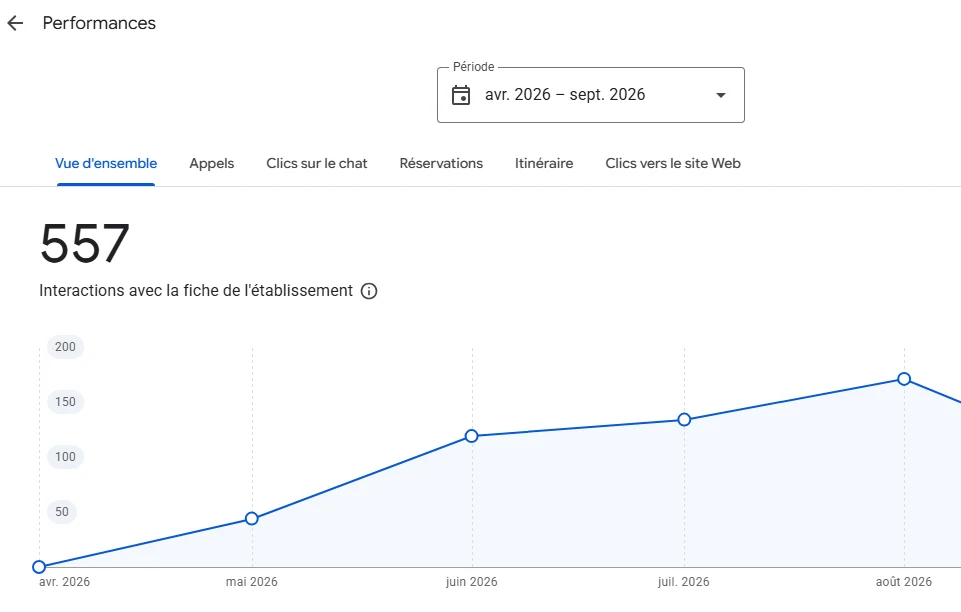
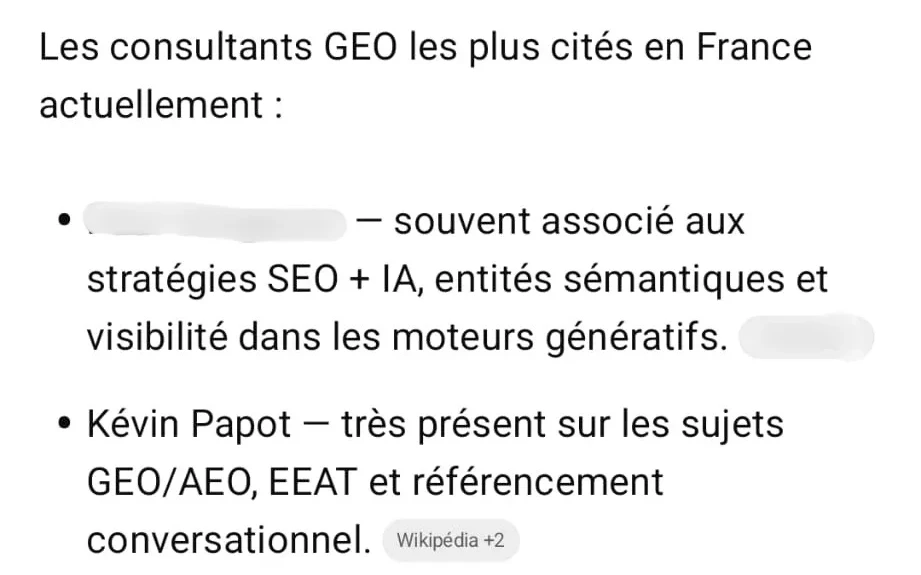




Your turn
Move the sliders with your own numbers. The maths is deliberately simple: searches, a share of clicks, a conversion rate, the value of a customer.
These are your assumptions, not a promise. We swap them for your real numbers during the call.
In practice
Pricing
Most of the cost comes at the start, in preparing the data and the template. I send you a written proposal after a free call and a quick look at your database.
Together, let's devour your competitors.
One by one, and in order. Every spot gained makes the next one easier to take: that's why it keeps growing. See the method

Who you're talking to
My name is Kévin Papot. More than fifteen years in the job, four co-written books, and the Newp agency, co-founded in Charente. I also run my own online shops, in France and internationally: one of them went from zero to a million visits a month.
Before we talk tags, we talk margin, average basket and profitability. When you book a call, I'm the one who picks up.
FAQ
Partly, and never on its own. AI formats real data; it doesn't make up the substance. Pages without data of their own aren't published.
Yes, if you publish in bulk without control. That's why we start with a test batch and remove what doesn't take.
No. Support is monthly and can be cancelled. You stay because it works, not because a contract forces you to.
As many as you have useful data for, no more. If your database can fill three hundred solid pages, we publish three hundred. I'd rather have a few visited pages than lots of ignored ones.
Information that only you hold or gather: measurements, observed prices, availability, photos, reviews. A simple list of municipalities isn't enough.
Usually, yes. You need to be able to create a page template and connect it to a database. I look at this with your developer before any commitment.
A copied page only changes the town name. A serious programmatic page displays information that genuinely differs from one page to the next. That criterion decides whether it gets published.
After a few months, I improve them, group them or delete them. Keeping hundreds of useless pages harms the rest of the site.
Yes, when the pages contain precise, verifiable facts. ChatGPT or Gemini happily pick up a figure, a table or a comparison found nowhere else. A vague text repeated a thousand times won't be picked up.
See also
30 minutes · video call · with me
Together we look at where you stand on Google and in AI, and what should change first.