html SEO consultant for printers and print shops · Kévin Papot
Kévin Papot Book a call

Home / Industries / Printing and graphic arts

SEO for printers: quote requests for your specialities, not on price alone.

For business cards or standard leaflets, your customers find online printers first. These websites show a price in three clicks and hold the first page for almost every everyday product. I'll be frank: you won't beat them on those products, neither on Google nor on price. Your workshop can do something else. A special paper, a finish, an unusual format, a deadline met, advice before the proof is signed off. I build your website around those specialities, so the buyer who needs them finds you and asks you for a quote.

  1. Rattle your competitors.
  2. Overtake them.
  3. Protect you from their attacks.
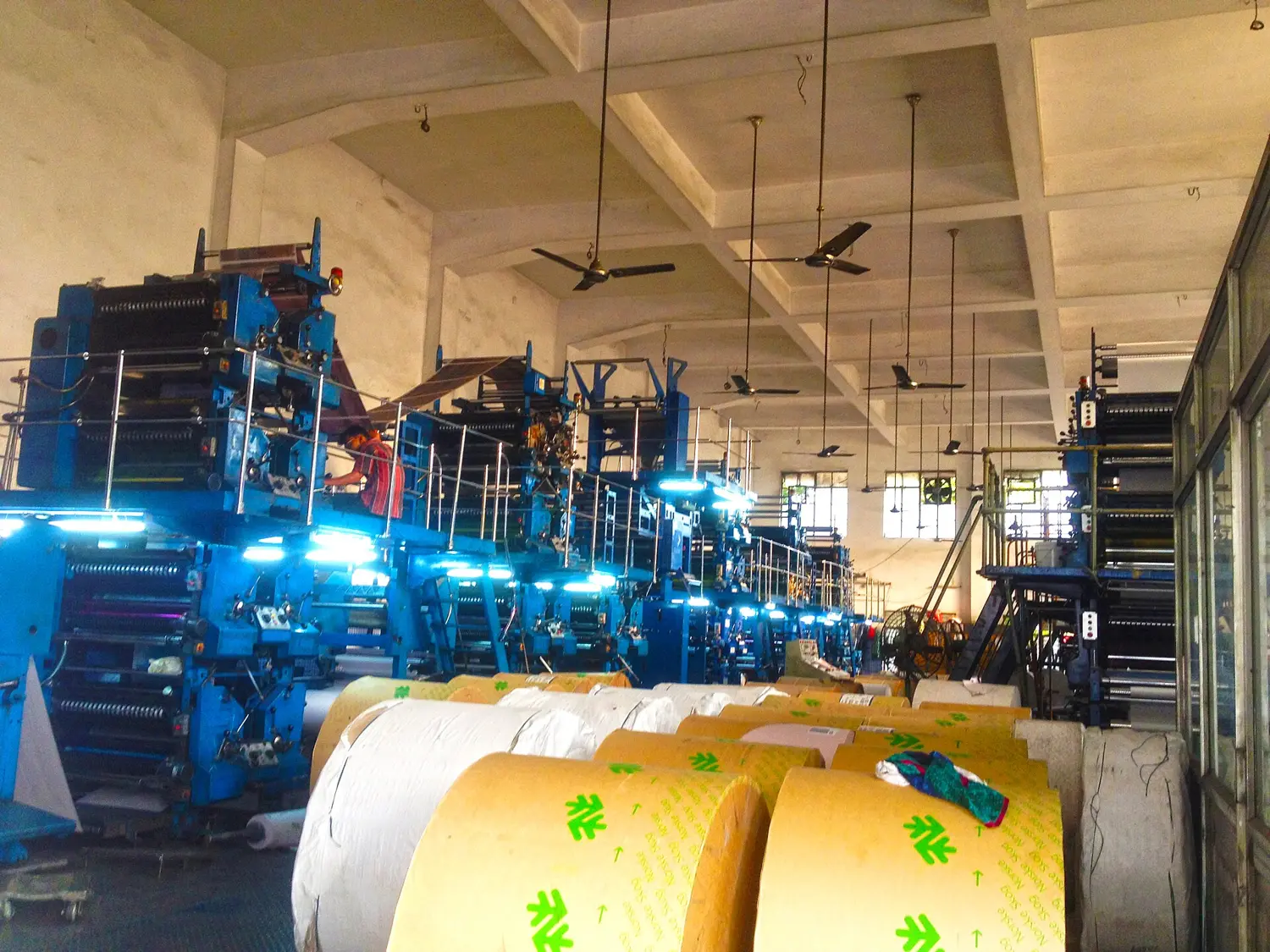
A print workshop
A print workshop. Photo: Subhashish Panigrahi, CC BY-SA 4.0, via Wikimedia Commons

15 years in SEO

4 books on SEO and GEO

200+ sites tracked every day

1M / month visits to my e-commerce site

They trusted me with their visibility

ibisDartyIxinaEurofinsBUTCegidMarie Claire InternationalEBPFauchon HospitalityCNP AssurancesÉditions Michel LafonIngram Micro
The detail of this page

Seven results, only one workshop you can walk into

A producer is looking for a printer for bottle labels near Cognac. The top six lines are online printers, a comparison site, a directory and a guide. Your workshop, which does gold foiling on site, is in seventh place. Move it up.

bottle label printer cognac
  1. An online printer · impression-en-ligne.exempleCheap adhesive labels: price in three clicks
  2. Another online printer · etiquettes-express.exempleYour labels delivered anywhere in France
  3. A comparison site · comparer-imprimeurs.exempleCompare label printing prices
  4. A directory · annuaire-imprimeries.exemplePrinters in Cognac: addresses and phone numbers
  5. A marketplace · devis-impression.exempleGet quotes from printers for your labels
  6. A guide · guide-etiquette.exempleHow to choose a bottle label?
  7. Youvotre-imprimerie.exempleBottle labels with gold foiling: printer in CharenteWater-resistant adhesive labels, foiling and embossing, short and medium runs. Proof before printing, quick quote.
Your position: 7

Fig. 1. Seven results for bottle labels. Six are selling a price. (The producer wanted to feel the paper before ordering. Only one result had a workshop to visit.)

What this means for you. I put on your pages what an ordering website can't write: your finishes, your runs, your proof and the person who answers.

What is SEO for a printer?

SEO for a printer is the work that makes your workshop visible on Google when a business, a local authority or an agency looks for a specific print job. It relies on one page per speciality and product, on past work described with its specifications, on an up-to-date Google Business Profile and a simple quote request. It's measured by the quote requests received for the jobs you want to produce, not by the number of visitors.

The problem

Where printers get stuck.

Symptom 1

Online printers own everyday products

For “flyer printing” or “cheap business cards”, the first page is made up of websites that pool orders from all over France on large machines. They show an instant price and deliver everywhere. On these searches, an independent workshop has neither the room nor any interest in competing with them.

Symptom 2

A website that lists machines

Many printers' websites present their machinery, with models and formats. It's a legitimate source of pride. Buyers, though, don't type the name of a press. They type what they want to get: an adhesive label, a carton, a sewn book, a banner.

Symptom 3

A quote you have to chase

Online printers give a price straight away. On your website, people often have to write to a general address and wait. For a custom job, an instant price is impossible, and buyers understand that. They at least want to know what to send you and when you'll reply.

An audit, for real

What I see in thirty seconds on a printer's website.

The site below doesn't exist, but its flaws do: they're the five I spot most often. Hover over a number.

Fig. 2. Fictional site, reconstructed. Any resemblance to yours would be a good reason to call me.

  1. 1No town and no speciality in the tab title“Home | Print shop” sets no workshop apart. “Printer in Angoulême: labels, short-run books and large format” says what you produce and where.
  2. 2One entry per machine, none per productCustomers aren't looking for machinery. They're looking for a printed object. The menu should name your specialities.
  3. 3“All your printing needs”That's the promise of low-price websites, which deliver it more cheaply. Name the two or three jobs where your workshop brings something else.
  4. 4A colour swatch or a rotary press from a stock image libraryShow your workshop, your press operators and objects you've printed, photographed up close.
  5. 5Processes instead of needs“Offset” and “Digital” are techniques. Customers think “labels”, “book”, “banner”. Organise your entries in their words.

What your customers type

What customers type when looking for a printer.

Here are six plausible searches for a print workshop. They serve as examples. The real list depends on your machines and specialities, and I draw it up during the audit.

1“print shop” or “printer” followed by your town's name
Someone searching like this wants to drop by the workshop, see a paper, collect their order. The Google map answers first. Your profile should give your opening hours, workshop photos and a list of what you print.
2“adhesive label printing” followed by a trade
A producer or craftsperson looks for labels for their bottles, jars, cosmetics. They have constraints on material, adhesive, water resistance. One page per use answers these questions and shows examples.
3“book printing” or “print a catalogue” in small quantities
An author, an association or a business wants fifty or three hundred copies. They know nothing about bindings or papers. A page explains the possible choices, the quantities you accept and the files to supply.
4The name of a finish: gold foiling, embossing, die-cutting
The buyer already knows what they want and is looking for who can do it. These searches are few and precise. One page per finish, with close-up photos, introduces you to customers low-price websites don't serve.
5“large format printing” and a town
Banners, signs, window graphics, stands: the customer is often a local shop or organiser up against a date. The page should give your formats, your materials, installation if you offer it, and your usual turnaround.
6“printer” followed by “urgent” or a deadline
Someone has a trade show in three days or a mistake to fix. They can't wait for a delivery from far away. If you accept these rush jobs, say so on a page, with your conditions and a direct number.
What works

A printer's five levers.

Lever 1

One page per speciality

I start from what sets you apart: labels, packaging, books, large format, fine stationery. Each speciality has its own page, with the materials, quantities, finishes and sectors you serve. That's where price stops being the only criterion.

Lever 2

One page per product you want to sell

Each product that's profitable for you has its own page, written in the customer's words rather than the workshop's. It says what it's for, the options, the files expected and the turnaround. I leave aside the products you can't make at online websites' prices.

Lever 3

A quote request that gets a fast reply

A short form per product asks for the essentials: quantity, format, preferred paper, date. It lets people attach a file. The page states the response time you actually meet. A quote returned quickly reduces the advantage of a price displayed online.

Lever 4

Past work described, not just photographed

A photo gallery with no text teaches Google nothing. Each job becomes a short case sheet: the customer's need, the material, the finish, the quantity, the turnaround. A buyer with a similar project recognises themselves and calls you.

Lever 5

The Google Business Profile and pre-press advice

Your profile shows the workshop, opening hours and reviews from business customers. Your website explains what you do before starting the press: file checks, the proof, sign-off. An automated ordering website rarely provides that service.

What costs dearly

The mistakes I often see on printers' websites.

Mistake 1

A home page announcing “all printing work”

That phrase puts you in competition with everyone, including low-price websites. Two or three specialities named at the top of the page attract requests closer to what you like to produce.

Mistake 2

Copying online websites' catalogues

Creating a hundred standard product pages with a price won't get you ahead of them. You'll spend time on it and attract customers who compare down to the cent.

Mistake 3

Workshop jargon with no explanation

“Four-colour double-sided, matt lamination, scoring” speaks to an agency buyer. The shopkeeper doesn't understand. Each technical term should be explained in one sentence, with a photo if possible.

Mistake 4

No guidance on the files to supply

Customers don't know which format to send or what margins to allow. They send an unusable file, or they give up. A clear page on file preparation avoids back-and-forth and answers real searches.

The method

What I set up for a printer.

Four steps. I start with the jobs that keep the workshop running at a decent margin, not with the whole catalogue.

  1. The choice. You tell me which jobs you want to produce more of. I set aside the products where only price matters.
  2. The know-how. I write the speciality and finish pages with your explanations and your workshop photos.
  3. The quote. I simplify the quote request on each page and state your response time.
  4. The tally. Every month, I log the quote requests received, product by product, and you tell me which ones went ahead.

One-minute test

Is SEO right for you?

Five frank questions to find out whether support makes sense in your situation. Sometimes the answer is no, and I'll tell you.

What it brings in

SEO you can count in euros.

A ranking doesn't pay a salary. What counts is what it brings: enquiries, customers, revenue. Move your page up and see what it could bring in.

Example assumptions, open to challenge: 250 searches a month for specialist printing in your region, 4% of visitors make an enquiry, one enquiry in three is signed (this varies a lot from one trade to another), €3,000 per customer. Click-through rates by position are rough estimates, and they've been shifting since Google started showing AI answers above the results. Redo the calculation with your numbers

What your page could bring in

Ticket no. 10th · worked example
Searchesper month, for specialist printing in your region
250
Estimated visitsclick-through rate: 1.5%
0
Possible enquiries4% of visitors
0
Possible customersone enquiry in three
0

Possible revenue€0

Close to home

Printing in Charente.

Charente has a long history with paper and print. Angoulême lives with books, comics and images. Cognac keeps a whole chain of label, carton and packaging suppliers busy for its bottles. A local workshop can therefore write pages for both sectors, in their own words, on top of pages for shops and village councils. I live between Cognac and Paris, I know the département, and I build your pages for those buyers.

Angoulême: books, comics and images

Authors, small publishers, schools and studios need short, carefully made print runs: albums, posters, exhibition catalogues. If you take on this work, a page says so with formats, papers and minimum quantities. These customers are looking for someone to talk to, not a shopping basket.

Cognac: labels, cartons and packaging

Spirits houses, producers and their suppliers order labels and packaging where the finish matters as much as the design. If your workshop can do foiling, embossing or speciality papers, show it on dedicated pages. Only name a client if they give you permission.

Shops, village councils and associations

In the département's villages, people look for a printer for a newsletter, fête posters, a menu, a banner. These customers want someone to talk to and local collection. Your Google Business Profile and a page on your local deliveries meet that need.

SEO consultant in CharenteAngoulêmeCognac

Beyond Google

What AI changes for a printer.

Buyers now describe their entire project to an AI such as ChatGPT, Gemini, Claude or Mistral before looking for a workshop. For example: “I make liqueurs near Cognac, I need two thousand adhesive labels with gold foiling that survive an ice bucket. Which printer should I contact?”. The AI explains the constraints, then sometimes cites a few workshops.

It relies on what those workshops have written: materials, finishes, quantities, sectors served. A printer whose website says “adhesive bottle labels, gold foiling, short and medium runs” gives it a ready-made answer. “Your printing partner for three generations” doesn't tell it what you can do.

Find out more about GEO

Fig. 3. Reconstruction, names hidden. This is the spot we aim for: on the list, with the most precise description.

Three typical cases

Three printer scenarios.

These three workshops are made up for the example. They illustrate three ways to get started. I build your plan once the audit is done.

A neighbourhood workshop

It prints for shops and associations in its town and sees customers leaving for online websites.

  1. Set up the Google Business Profile with opening hours, photos and completed jobs.
  2. Write a rush jobs page and a local collection page.
  3. Explain file preparation and pre-print checks.

A label printer

It works for a few large clients and wants to widen its customer base.

  1. Create one page per use: wines and spirits, food, cosmetics.
  2. Write one page per finish, with close-up photos.
  3. Place a short quote form on each of these pages.

A print shop with twenty employees

Its website presents the machines and mostly receives price requests for standard products.

  1. Replace the machine-based structure with a speciality-based one.
  2. Describe ten jobs with the need, the material and the turnaround.
  3. Remove from the menu the products the workshop no longer wants to sell.

In practice

What you get.

  • One page per speciality and finish, written with your workshop
  • One page for each product you want to sell more of
  • A short quote form, with your response time displayed
  • Ten jobs described, sorted by customer sector
  • A monthly log of quote requests, product by product

Pricing

How much does an SEO consultant cost?

The fee depends on four things. I give you a precise amount after a free first thirty-minute conversation.

  • The size of the site: ten pages or ten thousand
  • The competition on your queries
  • What you can do in-house, and what needs producing for you
  • The pace you want

Request a quote

Fancy a game?

Insert a coin.

A brochure website that hasn't changed in ten years is a set of undead pages. Grab the piece, slide it into the slot, and watch them fall.

Slide it into the machine
ZOMBIE SERP

INSERT COINSLIDE THE COIN INTO THE SLOT

Credit: 0

Fig. 4. Sixteen seconds. Five of the undead, including an article from 2014.

Together, let's devour your competitors.

One by one, and in order. Every spot gained makes the next one easier to take: that's why it keeps growing. See the method

Portrait of Kévin Papot

Who you're talking to

Your SEO consultant: a business owner, not just an SEO.

My name is Kévin Papot. More than fifteen years in the job, four co-written books, and the Newp agency, co-founded in Charente. I also run my own online shops, in France and internationally: one of them went from zero to a million visits a month.

Before we talk tags, we talk margin, average basket and profitability. When you book a call, I'm the one who picks up.

Book: GEO, devenir n°1 sur ChatGPTBook: Le SEO est mort, vive l'AEOBook: Votre fiche Google en haut de l'afficheBook: Votre page Google en première position

Read my storySee my method

FAQ

SEO and printing: your questions.

Can we compete with online printers on Google?

On standard products, no. They have a huge number of pages and prices your workshop can't match. I won't take you there. On a speciality, a finish, advice or a town, your page can show up, because those websites answer them poorly.

Should I show prices?

For a simple, repeat product, a starting price or a price table avoids requests that go nowhere. For a custom job, explain what makes the price vary: quantity, paper, finish, turnaround. You decide product by product.

Do I need an online quote tool on the website?

Not necessarily. A calculator is expensive to build and drags you back into price comparison. A short form and a quick reply are often enough. If you sell a lot of repeat products, the question is worth looking at with your numbers.

Should a printer open an online shop?

Only if you have products that can be ordered without discussion, and someone to handle the orders. I run my own online shops and I know the work involved. For a specialist workshop, the quote request is often still the right tool.

What can you write about our environmental labels?

What you give me, and nothing else. You tell me your current labels and what they cover. I present them without explaining their criteria and without vague wording about ecology. You proofread that part before it goes live.

How should we present work done for clients?

With their agreement. Some clients agree to be named, others don't. In that case, I describe the sector, the material and the finish without giving a name. The photo of the printed object must also be approved, especially for packaging that hasn't been released yet.

Searches for our specialities are rare. Is it worth it?

Do the maths with your numbers. A label or packaging customer reorders several times a year, sometimes for years. A few serious enquiries a month can be enough. If your speciality is almost never searched for, the audit will show it and I'll tell you.

Who writes the technical pages?

You give me the material: what the machine does, its limits, customers' common mistakes. I ask the questions and structure the page. The Newp team can write from your answers. Your workshop manager proofreads, so that no promise goes beyond what you can deliver.

Are communication agencies customers or competitors?

Both, depending on the case. Many agencies look for a reliable printer for their clients. A “you're an agency or a designer” page explains your file formats, proofs and turnaround times. It doesn't stop you from also serving customers directly.

Do you know the printing trade?

I'm not a printer. I've co-written four books, so I've been on the side of the person waiting for their copies. My trade has been SEO for fifteen years. You explain your machines and your customers to me, and I find out what those customers type.

30 minutes · video call · with me

Be the one they remember.

Together we look at where you stand on Google and in AI, and what should change first.

Book a callFig. 5. A K. (The landscape was missing one.)










