html SEO consultant for campsites and outdoor stays · Kévin Papot
Kévin Papot Book a call

Home / Industries / Outdoor accommodation

SEO for campsites: more direct bookings, with fewer commissions to pay.

A holidaymaker looking for a campsite first lands on booking platforms, comparison sites and holiday directories. These websites hold the first page for almost every general search, and I'd rather tell you that straight away. Every stay they send you costs you a commission. Yet your site has what no listing describes well: its exact location, its accommodation, its atmosphere and the person who answers the phone. I work on your website and your Google Business Profile so that holidaymakers who saw your name elsewhere come and book directly with you.

  1. Rattle your competitors.
  2. Overtake them.
  3. Protect you from their attacks.
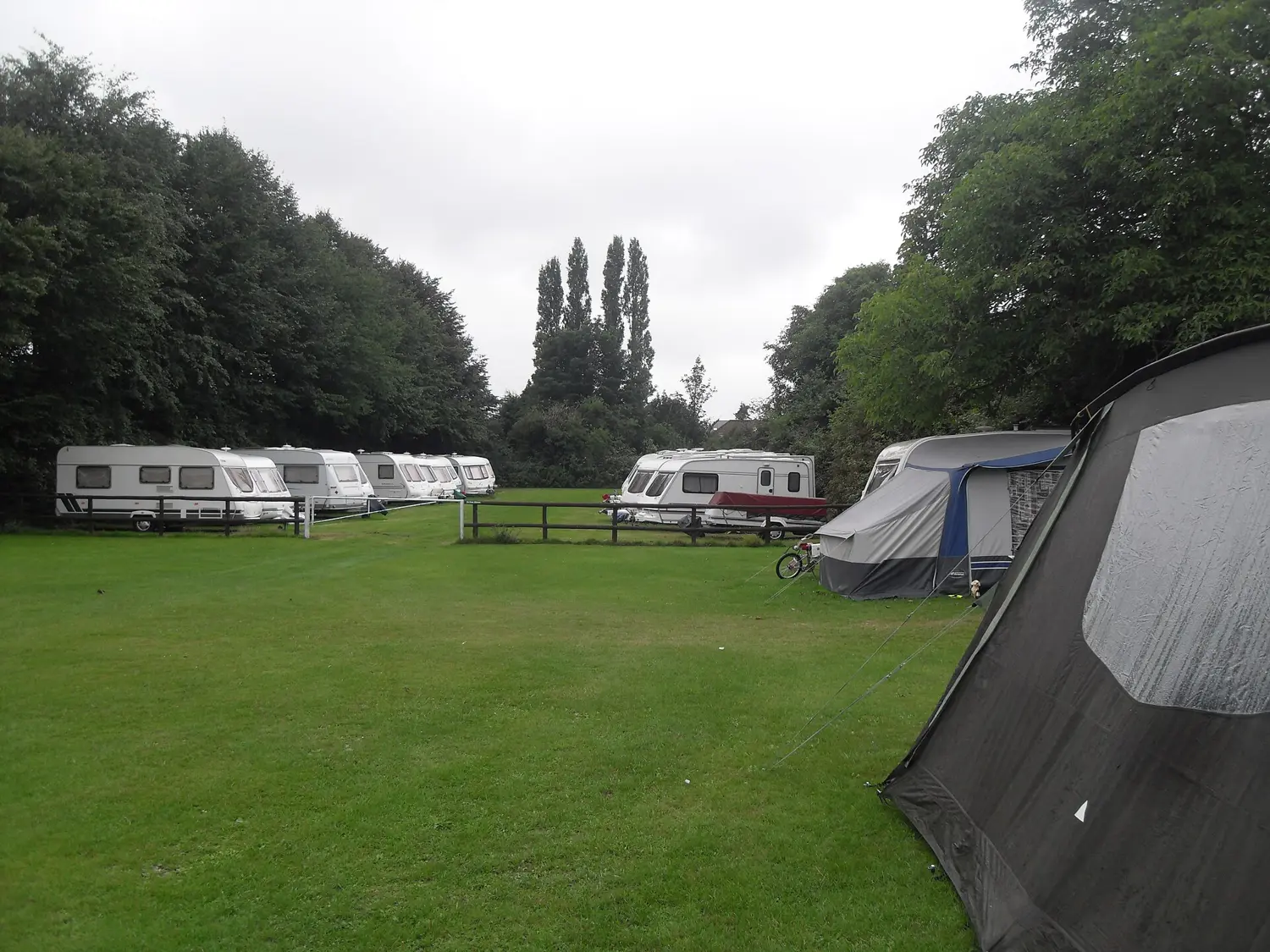
A campsite
A campsite. Photo: Anthony Parkes, CC BY-SA 2.0, via Wikimedia Commons

15 years in SEO

4 books on SEO and GEO

200+ sites tracked every day

1M / month visits to my e-commerce site

They trusted me with their visibility

ibisDartyIxinaEurofinsBUTCegidMarie Claire InternationalEBPFauchon HospitalityCNP AssurancesÉditions Michel LafonIngram Micro
The detail of this page

The map, seen by a family planning their summer

A family is looking for a campsite on the banks of the Charente. On the map, Google shows them three profiles: a large site far from the river, a motorhome stopover and a campsite with old photos. Yours is by the water, and its profile is in fourth place. Get it into the three profiles shown.

campsite by the charente river
  1. A large campsite 312 reviewsCampsite · twenty kilometres from the river
  2. A motorhome stopover 88 reviewsService area · no accommodation
  3. A nearby campsite 41 reviewsCampsite · old photos
  4. More businesses
  5. YouYour campsite 36 reviewsCampsite · no description
Your profile: no. 4, off the map

Fig. 1. A riverside search, three profiles, none of them by the water. (Your site ran right down to the river. Your profile didn't say so anywhere.)

What this means for you. I complete your profile with your actual location, your dates, your accommodation and this season's photos, so Google knows when to show you.

What is SEO for a campsite?

SEO for a campsite is the work that makes your site visible on Google when a holidaymaker looks for an outdoor stay in your area. It relies on a complete Google Business Profile, one page per type of accommodation and pitch, pages on what there is to do nearby, and prices you can read without going through a booking engine. It's judged by the bookings made on your website and the calls received at reception, not by the number of visits.

The problem

Where campsites get stuck.

Symptom 1

Booking platforms hold the first page

For “campsite” followed by a region or département, the top results are platforms, comparison sites and directories. Your site appears there in a list, among twenty others, sorted by price. On these broad searches, your website will stay behind them. It can, however, answer specific searches and those that include your name.

Symptom 2

Your own name gets away from you

A holidaymaker who types your campsite's name has already chosen. Often, a platform appears above your website for that search, sometimes with a paid ad. They click, book through it, and you pay a commission for a customer who was looking for you.

Symptom 3

A website updated in spring, when summer is booked in winter

Many campsites change their online prices just before opening. Families, however, plan their holidays months earlier. By the time the new prices reach the website, some of the stays have already been booked elsewhere. Google also needs time to reread a changed page.

An audit, for real

What I see in thirty seconds on a campsite website.

The site below doesn't exist, but its flaws do: they're the five I spot most often. Hover over a number.

Fig. 2. Fictional site, reconstructed. Any resemblance to yours would be a good reason to call me.

  1. 1No place and no selling point in the page title“Home | Campsite” fits every site in France. “Campsite on the banks of the Charente, near Cognac: pitches and rentals” says where you are and what you rent.
  2. 2Prices in a file to downloadOn a phone, this file opens badly and Google almost never shows it. Prices by period should be on a page of the website.
  3. 3“Welcome to holiday paradise”Nobody types that phrase. Write the river, the nearby town and the kind of stay you offer.
  4. 4A sunset unrelated to the siteHolidaymakers want to see the pitches, the inside of the rentals and the pool as it is this year.
  5. 5Three blocks without any detail“Rentals” says neither how many it sleeps nor the price. Replace these blocks with your actual accommodation, with a photo and a starting price.

What your customers type

What holidaymakers type when looking for a campsite.

Here are six plausible searches for a family campsite. I give them as examples. The real list comes out of the audit and changes with your region and your accommodation.

1“campsite” followed by a specific place
The holidaymaker names a river, a lake, a town or a sight to visit. The Google map answers first. Your profile must be complete, and your website must spell out that place in full, with the distance on foot or by car.
2“campsite with pool” or “riverside campsite” and a region
The search is about a facility. One page per major facility shows recent photos, the pool's opening dates and access conditions. An icon in a list of services isn't enough.
3“mobile home rental” followed by a place and a period
Here, the person looks for accommodation before looking for a site. Each type of rental has its own page: how many it sleeps, the layout, interior photos, what's provided and the price by period.
4“campsite open” followed by an off-season month
Retirees, couples without children and motorhome travellers go away in spring and autumn. If you're open, write your exact dates and what's running at that time. These stays fill the quiet weeks.
5“campsite” with a dog, a motorhome or a bike
These holidaymakers have a constraint and expect a clear answer. A page says whether you accept pets and on what conditions, whether you have a service area, a bike shelter. Whoever reads the answer books without calling three sites.
6Your campsite's name, alone or followed by “reviews”
This is the decisive search for direct bookings. Your website must come up first, with a clear title, your prices and a button to book. Your Google Business Profile must show recent reviews and your replies.

What works

A campsite's five levers.

Lever 1

A Google Business Profile kept up all year round

The profile answers searches on the map and for your name. I set the category, opening dates, facilities, this season's photos and the link to your booking. I also help you reply to reviews, including those from last summer left unanswered.

Lever 2

One page per accommodation type and per pitch

Tent, caravan, motorhome, equipped rental, unusual accommodation: each offer has its own permanent page, with its photos, layout, capacity and prices by period. Holidaymakers compare these details. A platform sums them up in three lines.

Lever 3

Prices and dates readable on the page

When prices only exist in the booking engine, Google can't read them and visitors have to enter dates to get an idea. I show a simple table by period on each page, then the button to book.

Lever 4

Pages on what there is to do nearby

A family chooses a destination before choosing a site. I write pages on swimming, bike rides, markets and visits, with distances from your reception. Platforms handle these searches badly, because they don't know the area.

Lever 5

Direct booking, simple and reassuring

Holidaymakers book on a platform because it's easy and they trust it. Your website needs to offer the same simplicity: a visible button, few steps, clear cancellation terms and a number for those who prefer to call.

What costs dearly

The mistakes I often see on campsite websites.

Mistake 1

The campsite map and prices as an image or a file

Google can't read text in an image and rarely shows a file. Holidaymakers on their phones have to zoom in to make out a price. Prices should be written on the page.

Mistake 2

Emptying the website at closing time

Some websites display “closed, see you next year” on every page in autumn. What those pages had earned disappears over the winter, just when families start searching.

Mistake 3

A booking engine hosted at another address

Visitors leave your website for that of a provider they don't know, with a different look. They hesitate, and you no longer know where the booking came from. I check that the journey stays consistent and measurable.

Mistake 4

Photos several seasons old

The rentals have been replaced, the pool redone, but the website still shows the old site. Holidaymakers compare with the photos in recent reviews and have doubts. A set of photos each season solves this.

The method

What I set up for a campsite.

Four steps. I fit the schedule around your season: most of the work is done while the site is closed.

  1. The inventory. I look at where your bookings come from and what appears when someone types your campsite's name.
  2. The profile and the name. I set up your Google Business Profile and home page so your website comes up first for your name.
  3. The accommodation. I write one page per accommodation type, facility and nearby activity, with the season's prices.
  4. The review. Every month you're open, I count direct bookings and compare them with platform bookings.

One-minute test

Is SEO right for you?

Five frank questions to find out whether support makes sense in your situation. Sometimes the answer is no, and I'll tell you.

What it brings in

SEO you can count in euros.

A ranking doesn't pay a salary. What counts is what it brings: enquiries, customers, revenue. Move your page up and see what it could bring in.

Example assumptions, open to challenge: 500 searches a month for a campsite in your area, 3% of visitors make an enquiry, one enquiry in three is signed (this varies a lot from one trade to another), €700 per customer. Click-through rates by position are rough estimates, and they've been shifting since Google started showing AI answers above the results. Redo the calculation with your numbers

What your page could bring in

Ticket no. 10th · worked example
Searchesper month, for a campsite in your area
500
Estimated visitsclick-through rate: 1.5%
0
Potential enquiries3% of visitors
0
Possible customersone enquiry in three
0

Possible revenue€0

Close to home

Camping in Charente.

In Charente, people come camping for the river, the streams, the stone villages and the peace and quiet. Holidaymakers also pass through Angoulême for its festivals and Cognac for its cellars. Whoever plans this kind of stay searches with the name of the river, a town or a village such as Jarnac or Confolens. I know this département, where I co-founded the Newp agency, and I write your pages for visitors who choose the countryside and fresh water.

The Charente river: swimming, canoeing and cycling

The river and the cycle route along it bring swimmers, paddlers and cyclists. If your site is close to a stopping point, a canoe base or a river beach, a page says so with the exact distance. Cyclists also look for a pitch for a single night.

Angoulême: festival weeks

During the town's big events, festival-goers look for accommodation nearby. A campsite open on those dates can say so on a dedicated page, with travel time and parking options. First check that your opening dates allow it.

Cognac and the vineyards: short breaks

Around Cognac, people come for the cellars, the vines and the riverbanks, sometimes for two or three nights and outside summer. A page on these visits, written with your local tips, answers those planning a short break rather than a summer holiday.

SEO consultant in CharenteAngoulêmeCognac

Beyond Google

What AI changes for a campsite.

Families now describe their entire holiday to an AI such as ChatGPT, Gemini, Claude or Mistral. For example: “there are five of us with a dog, we're looking for a quiet campsite by a river in Charente, with a rental for the second week of August”. The AI sums up what it has read, then sometimes suggests a few sites.

It finds these sites on campsite websites, Google Business Profiles, reviews and tourism websites. A campsite that writes down its dates, accommodation, pet policy and distance to the river gives it facts to repeat. “An idyllic setting for unforgettable holidays” answers none of these questions.

Find out more about GEO

Fig. 3. Reconstruction, names hidden. This is the spot we aim for: on the list, with the most precise description.

Three typical cases

Three campsite scenarios.

These three campsites don't exist. I made them up to show where I start depending on the size of the site. Yours will get its own plan after the audit.

A small family campsite

It has around forty pitches and takes its bookings by phone.

  1. Complete the Google Business Profile with dates, photos and facilities.
  2. Write a prices page that's readable on a phone, with no file to open.
  3. Ask regulars for a review at the end of their stay.

A campsite with rentals and a pool

Most of its stays come through platforms, with a commission every time.

  1. Get the website to come up first for the campsite's name.
  2. Create one page per rental type, with layout, photos and prices by period.
  3. Make the booking button visible everywhere, with the cancellation terms.

A campsite that wants a longer season

July and August are full; May, June and September stay half empty.

  1. Create one page per quiet period, with what's open and the prices.
  2. Write the cycling, motorhome and short break pages.
  3. Publish the next season's dates and prices as early as winter.

In practice

What you get.

  • A complete Google Business Profile, with this season's dates and photos
  • A permanent page per accommodation type, pitch and facility
  • A price table readable on the page, updated with you
  • Pages on activities around the campsite, with distances
  • A monthly report on direct bookings, compared with platform bookings

Pricing

How much does an SEO consultant cost?

The fee depends on four things. I give you a precise amount after a free first thirty-minute conversation.

  • The size of the site: ten pages or ten thousand
  • The competition on your queries
  • What you can do in-house, and what needs producing for you
  • The pace you want

Request a quote

Fancy a game?

Insert a coin.

The copycat, the price-slasher, the big chain: they all want your spot. Grab the piece and slide it into the slot.

Slide it into the machine
SERP KOMBAT

INSERT COINSLIDE THE COIN INTO THE SLOT

Credit: 0

Fig. 4. Sixteen seconds, five opponents, only one first place.

Together, let's devour your competitors.

One by one, and in order. Every spot gained makes the next one easier to take: that's why it keeps growing. See the method

Portrait of Kévin Papot

Who you're talking to

Your SEO consultant: a business owner, not just an SEO.

My name is Kévin Papot. More than fifteen years in the job, four co-written books, and the Newp agency, co-founded in Charente. I also run my own online shops, in France and internationally: one of them went from zero to a million visits a month.

Before we talk tags, we talk margin, average basket and profitability. When you book a call, I'm the one who picks up.

Book: GEO, devenir n°1 sur ChatGPTBook: Le SEO est mort, vive l'AEOBook: Votre fiche Google en haut de l'afficheBook: Votre page Google en première position

Read my storySee my method

FAQ

SEO and campsites: your questions.

Can we get ahead of the booking platforms?

For “campsite” followed by a region, no, and I'm not promising it. For your campsite's name, a specific place or a facility, your website and profile can appear alongside them or ahead of them. These are the searches of holidaymakers close to booking.

Should we leave the platforms?

No, not as long as they fill weeks you wouldn't fill on your own. They also spread your name. My job is to bring back to you the holidaymaker who discovered you there. You then decide how many pitches you hand over to them.

Am I allowed to show a lower price on my website?

It depends on the contracts you've signed with each platform. I won't settle that question for you. Reread your terms or have them reviewed. In any case, you can highlight what direct booking brings: choice of pitch, a contact, flexibility.

When should the work start?

At closing time, or from the autumn. The pages have time to be written, read by Google and corrected before families book. If you contact me in May, I start with the Google Business Profile and the campsite's name, which work faster.

What happens to the pages over winter?

They stay online. Only the prices and dates change. A page that has been around for several years keeps what it has earned. In winter, it announces the dates of the coming season and offers to let people know when bookings open.

Can you write about our star rating and labels?

Yes, using your information. You tell me your current rating and labels, and I place them where holidaymakers look for them. I don't explain any award criteria and I don't display anything you can't back up.

What should we do about last summer's bad reviews?

Reply to them, even late, with facts: what happened and what has changed since. Holidaymakers read the replies as much as the reviews. I give you a template, and you adapt it to each case in your own words.

Our website is provided by our booking software. Is that a problem?

Not necessarily. I look at what Google can read: the pages, titles, prices, photos. If some settings are locked, I list what to ask your provider. Sometimes, a few pages added alongside are enough.

Should I translate the website?

If some of your holidaymakers come from abroad, yes, for the pages used to book: home, accommodation, prices, access. A machine translation left as it is raises doubts. Better five proofread pages than fifty approximate ones.

Do you know the campsite business?

I know SEO, which I've been practising for fifteen years. I also run my own online shops, so I know what a sale through an intermediary costs. The site, the season and your customers, you know better than me, and the audit starts with your explanations.
30 minutes · video call · with me

Be the one they remember.

Together we look at where you stand on Google and in AI, and what should change first.

Book a callFig. 5. A K. (The landscape was missing one.)










