html SEO consultant for solar PV: solar installers
Kévin Papot Book a call

Home / Industries / Solar panels

SEO for solar PV installers: get your own quote requests, without buying them from a platform.

A homeowner thinking about solar has often already had three calls from cold-callers and filled in a form on a comparison site. They're wary, and rightly so. When they finally look for an installer near them, they want a name, an address, roofs fitted in their town and clear explanations. My job is to make sure they find all that with you.

  1. Rattle your competitors.
  2. Overtake them.
  3. Protect you from their attacks.
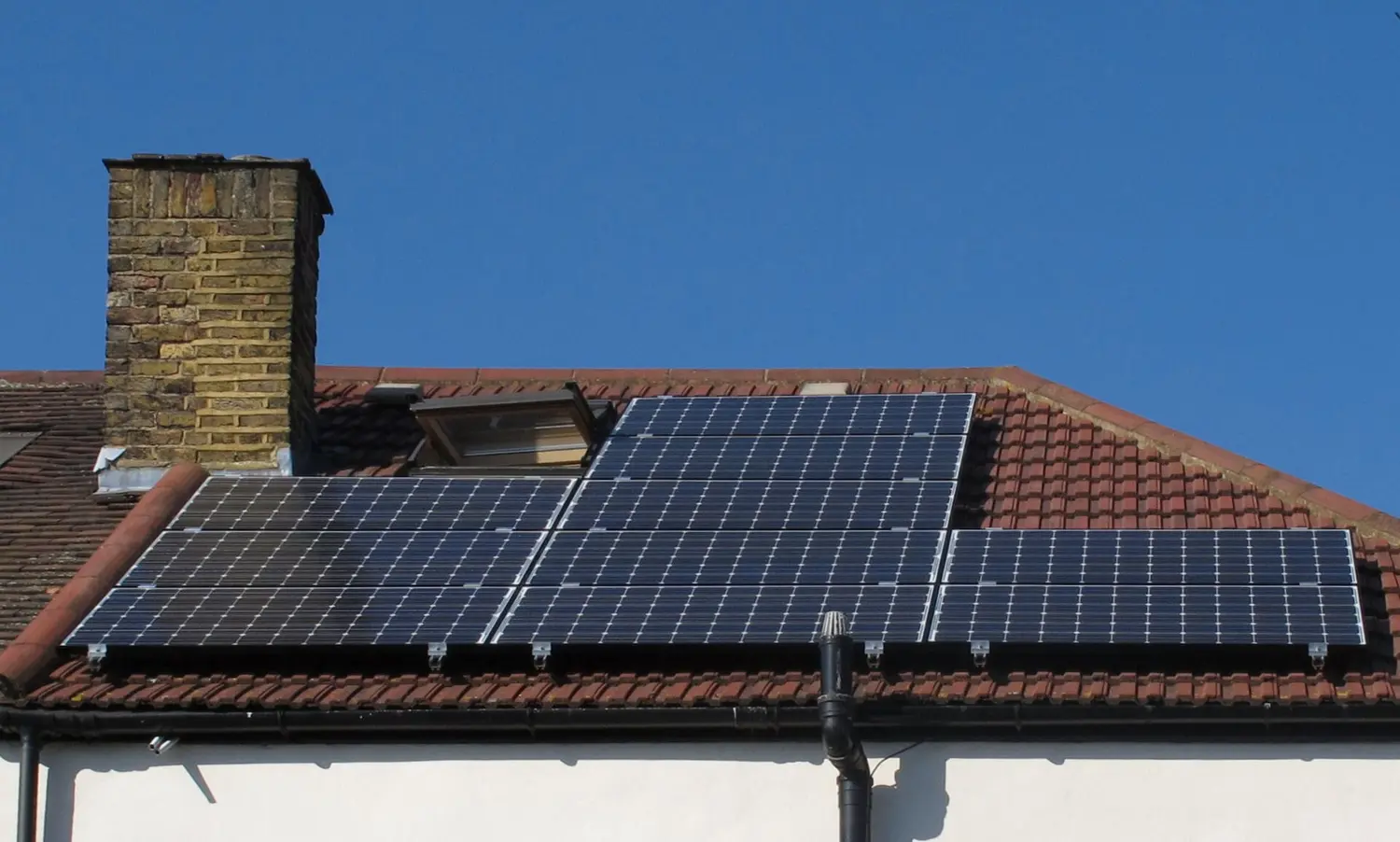
Solar panels on a roof
Solar panels on a roof. Photo: David Hawgood, CC BY-SA 2.0, via Wikimedia Commons

15 years in SEO

4 books on SEO and GEO

200+ sites tracked every day

1M / month visits to my e-commerce site

They trusted me with their visibility

ibisDartyIxinaEurofinsBUTCegidMarie Claire InternationalEBPFauchon HospitalityCNP AssurancesÉditions Michel LafonIngram Micro
The detail of this page

Seven results, only one installer

Type “solar panels” followed by your town. The first six lines are comparison sites, national networks and directories. The seventh is yours, and you're the only one who goes up on roofs. Climb the page.

solar panels angoulême
  1. A comparison site · solar-quotes.exampleSolar panels in Angoulême: compare quotes
  2. A national network · solar-network.exampleSolar PV installation all over France
  3. A directory · energy-directory.exampleSolar installers in Charente
  4. A platform · energy-works.exampleGet several solar panel quotes
  5. Another comparison site · compare-solar.exampleSolar panel prices: free simulation
  6. An energy supplier · solar-offer.exampleTurnkey solar kit, installation included
  7. Youyour-business.exampleSolar PV installer in Angoulême: survey, installation and paperworkA team of employed installers. Roofs fitted across the area, to see town by town.
Your position: 7

Fig. 1. Seven results for solar panels. Only one owns a ladder. (The first six sell your phone number. The seventh sells installed panels.)

What this means for you. I work on the searches where a local business can rank: those containing a town, a type of roof or a specific question.

What is SEO for a solar PV installer?

SEO for a solar PV installer is the search optimisation of their business for the searches homeowners make before installing panels: an installer in their town, a price, a question about payback or paperwork. It relies on the Google Business Profile, a page per type of installation, dated and located jobs, and up-to-date explanations of grants and qualifications. The goal is to receive serious survey requests directly, without buying them from a middleman.

The problem

Where it gets stuck in solar PV.

Symptom 1

Quote platforms take over the page

For “solar panels” followed by a town, the first results are often comparison sites. They then resell the contact to several installers. You pay for an enquiry that three competitors received at the same time as you.

Symptom 2

Cold-calling has damaged trust

Many homeowners have been called by pushy, sometimes dishonest, sellers. They arrive on your website looking for proof that you're a real local business. If the site looks like a lead seller's, they leave.

Symptom 3

A long decision the website doesn't support

Between the first search and the signature, several months often go by. The customer reads, calculates, compares, asks their neighbour. A website offering nothing but a “free quote” form is no use to them during all that time.

An audit, for real

What I spot in thirty seconds on a solar installer's website.

The site below doesn't exist, but its flaws do: they're the five I spot most often. Hover over a number.

Fig. 2. Fictional site, reconstructed. Any resemblance to yours would be a good reason to call me.

  1. 1A browser tab saying “Green energy”Nobody types those words to find an installer. Google expects “solar PV installer” and the name of your area.
  2. 2An “Our solutions” menu with no types of installationHouse, farm building, solar carport: one page for each. The customer is looking for their own case, not your “solutions”.
  3. 3A slogan cold-callers use too“Tomorrow's energy” doesn't say who you are. Write your trade, your town and how long you've been installing.
  4. 4A photo supplied by the manufacturerIt turns up on lots of other websites. A roof fitted by your team, with the town in the caption, proves you exist.
  5. 5Installations with no town or output“House roof in Jarnac, commissioned in April”: that's what this customer's neighbour is searching for.

What your customers type

What a homeowner types before installing panels.

Here are six plausible searches. They're illustrations, not measurements: the audit establishes yours and their real volumes.

1“solar panel installer” followed by their town
They've decided to get advice from a nearby professional. They look at the map, then at two or three websites. They need a complete Google Business Profile and a page naming the towns you work in, with roofs you've fitted there.
2“home solar PV installation price”
They want a ballpark figure before calling anyone. The page must explain what makes the price vary: output, roof, equipment, grid connection. It can give a range presented as an example, and offer an on-site survey.
3“are solar panels worth it or not”
They have doubts, and they've read conflicting opinions. An honest page, saying when an installation is justified and when it isn't, sets you apart from everyone promising savings without looking at the roof.
4“self-consumption with or without a battery”
They're well into their project and comparing technical options. A clear comparison, written in your installer's words and illustrated with real cases, shows that you advise before you sell.
5“solar panel grants” followed by the year
They're looking for what they're entitled to. The page must describe the grants currently available, cite the official source and display its last-updated date. An out-of-date page on this topic loses you their trust in a single read.
6your business name followed by “reviews”
They have your quote in hand and are checking before signing. They'll read your Google reviews, your replies, and everything that comes up under your name. Better to know what they'll find.

What works

The five levers for a solar PV installer.

Lever 1

The Google Business Profile

For a local search, the map appears before the websites. The category, the services, the service area and the photos of your installations decide whether you appear among the businesses shown. It's also where the customer checks that you have a real address.

Lever 2

One page per type of installation

House roof, farm building, car park solar canopy, ground-mounted system: these aren't the same customers or the same searches. Each type you want to sell needs its own page, with its constraints, its steps and its examples.

Lever 3

Dated and located jobs

An installation described with the town, the output fitted, the type of roof and the commissioning date reassures more than a long speech. It also gives Google precise, local text that platforms can't write.

Lever 4

Pages that answer doubts

Payback, equipment lifespan, maintenance, insurance, selling the surplus: customers ask themselves these questions for weeks. If your pages answer them simply, they come back to your website at every stage, and you're the one they call at the end.

Lever 5

Proof of reliability

Qualifications, insurance, guarantees, the owner's name, photos of the team: in a market where cold-calling has left bad memories, these must be visible from the first page. They count for the customer, for Google and for the AI tools that describe your business.

What costs dearly

The mistakes I most often find on solar installers' websites.

Mistake 1

A simulator instead of a website

The home page asks for an address and a phone number before saying who you are. Visitors recognise the lead sellers' method and leave.

Mistake 2

Savings promised with no conditions

“Halve your bill”: customers have read it everywhere and no longer believe it. A real example, with its assumptions written down, beats a promise.

Mistake 3

Pages on grants that are never reread

The rules change, the page stays. A customer who finds outdated information on your site concludes that the rest is outdated too.

Mistake 4

Catalogue photos

The manufacturer's panels against a blue sky are on every website. Your own roofs, photographed on installation day, are the only images nobody else has.

The method

What I set up for a solar PV installer.

Order matters. I start with what brings in direct enquiries, then deal with what makes them more serious.

  1. The profile. Categories, services, area, installation photos: I complete it and keep it up to date with you.
  2. Installations. One page per type of project you want to sign, written from your jobs.
  3. Answers. The pages on price, payback, grants and paperwork, with their last-updated date.
  4. Tracking. We count survey requests, their town and their source, then those that turn into jobs.

One-minute test

Is SEO right for you?

Five frank questions to find out whether support makes sense in your situation. Sometimes the answer is no, and I'll tell you.

What it brings in

SEO you can count in euros.

A ranking doesn't pay a salary. What counts is what it brings: enquiries, customers, revenue. Move your page up and see what it could bring in.

Example assumptions, open to challenge: 700 searches a month for a solar PV installer in your area, 3% of visitors make an enquiry, one enquiry in three is signed (this varies a lot from one trade to another), €9,000 per customer. Click-through rates by position are orders of magnitude, and they've been shifting since Google started showing AI answers above the results. Redo the calculation with your own figures

What your page could bring in

Ticket no. 10th · worked example
Searchesper month, for a solar PV installer in your area
700
Estimated visitsclick-through rate: 1.5%
0
Potential enquiries3% of visitors
0
Possible customersone enquiry in three
0

Possible revenue€0

Close to home

Solar PV in Charente.

Charente has two urban areas, Angoulême and Cognac, and a large number of small towns and hamlets. There are detached houses and farm buildings, so roofs of very different sizes. The owner of a house and the operator of a farm building don't type the same words, and both want to know where the business comes from. Your address, the towns where you install and your located jobs must be readable on the website and on the profile. I live between Cognac and Paris, I know the département and we can meet there.

Houses and farm buildings

A house near Angoulême and a farm building in the north of the département aren't sold with the same page. The homeowner wants a lighter bill. The farmer wants a useful roof and someone who understands their business. I separate the two on the website.

Around Cognac

Wine estates and businesses in the trade have cellars, sheds and storage buildings. A page dedicated to commercial roofs, with examples from the area, answers searches that consumer-focused websites leave aside.

The name of the town

Homeowners rarely type the name of the département. They type their commune or the neighbouring town. Your job pages, sorted by town, show Google and the customer that you've already installed near them.

SEO consultant in CharenteAngoulêmeCognac

Beyond Google

What AI changes for a solar PV installer.

Solar is a topic people ask an AI like ChatGPT, Gemini, Claude or Mistral a lot of questions about. They write, for example: “I have a house with a south-facing roof near Cognac, are panels worth it and who should I contact?”. The AI answers with an explanation, a list of points to check, and more and more often a few business names.

It picks the businesses it finds described the same way in several places: the website, the Google Business Profile, reviews, trade directories, the local press. An installer who writes clearly what they install, in which towns and with which qualifications, has a better chance of being cited than a website that only talks about “the energy transition”. I check what AI tools currently say about your trade in your area, then fix what's missing.

Find out more about GEO

Fig. 3. Reconstruction, names hidden. This is the spot we aim for: on the list, with the most precise description.

Three typical cases

Three solar PV scenarios.

These three situations are examples made up to show the method. None describes a real client.

A three-person installer

They buy their leads from a platform and sign few quotes.

  1. Overhaul the Google Business Profile and post every installation on it, with the town and the output.
  2. Create a page for house roofs and a page on pricing, written from their own jobs.
  3. Compare each month the cost of a job signed through the platform and through the website.

An electrician adding solar

They're known for general electrical work, not for panels.

  1. Add solar PV to the profile's services and to the website's pages, without erasing the rest.
  2. Publish the first installations in detail, even if there are only a few.
  3. Display the up-to-date qualifications held for this activity.

A company focused on agricultural and commercial projects

Its clients are farmers and business owners, and projects take a long time.

  1. Write one page per type of building: farm shed, commercial roof, solar canopy.
  2. Present projects with floor area, output and how the project unfolded.
  3. Answer the early-stage questions with guides: survey, financing, paperwork, timescales.

In practice

What you get.

  • A complete Google Business Profile, fed by photos of your installations
  • One page per type of installation you want to sell
  • A job page template: town, output, roof, date
  • Pages on price, payback and grants, dated and reviewed
  • A monthly log of survey requests, by town and by source

Pricing

How much does an SEO consultant cost?

The fee depends on four things. I give you a precise amount after a free first thirty-minute conversation.

  • The size of the site: ten pages or ten thousand
  • The competition on your queries
  • What you can do in-house, and what needs producing for you
  • The pace you want

Request a quote

Fancy a game?

Insert a coin.

The big chain has sat up there for years, hogging every click. Grab the piece and slide it into the slot.

Slide it into the machine
KING CLICK

INSERT COINSLIDE THE COIN INTO THE SLOT

Credit: 0

Fig. 4. Sixteen seconds to topple a giant.

Together, let's devour your competitors.

One by one, and in order. Every spot gained makes the next one easier to take: that's why it keeps growing. See the method

Portrait of Kévin Papot

Who you're talking to

Your SEO consultant: a business owner, not just an SEO.

My name is Kévin Papot. More than fifteen years in the job, four co-written books, and the Newp agency, co-founded in Charente. I also run my own online shops, in France and internationally: one of them went from zero to a million visits a month.

Before we talk tags, we talk margin, average basket and profitability. When you book a call, I'm the one who picks up.

Book: GEO, devenir n°1 sur ChatGPTBook: Le SEO est mort, vive l'AEOBook: Votre fiche Google en haut de l'afficheBook: Votre page Google en première position

Read my storySee my method

FAQ

SEO and solar PV: the questions I get asked.

Quote platforms are everywhere. Can I really get ahead of them?

On national searches, rarely, and that's not the goal. On local searches, it's a different story: the map shows businesses, not comparison sites, and a precise page about your town can rank alongside them. I don't promise a position. I target the searches where a local business has a real chance.

Should I stop buying leads?

Not straight away. First we grow direct enquiries, then we compare the cost of a job signed through each channel. You then decide with your own figures.

Can I show prices on my website?

Yes, as long as you present them as examples and write down what they include. Customers are looking for a ballpark figure. If they don't find it on your site, they'll get it from a comparison site, along with the form that comes with it.

How do I talk about grants without getting it wrong?

By describing the grants currently available from official sources, showing the date of the last update, and rereading the page whenever something changes. I set up the structure and the review schedule. The regulatory information is yours to approve.

How long before enquiries start coming in?

Your Google Business Profile usually responds faster than the website, whose pages often take several months. It depends on your area, your competitors and where you start from. I give you a ballpark after the audit, not before.

My business depends on grant announcements. Does SEO keep up?

Demand rises and falls with the news, that's true. Core pages stay useful either way: when interest picks up again, they are already in place and already known to Google. That's what people who start at the peak are missing.

I also work for farmers and businesses. Do I need a separate website?

No, one website is enough. You do need separate pages, though, because a farmer and a homeowner don't search with the same words and don't expect the same proof.

Do I need a page for every town?

Only where you have installations to show. A few area pages filled with real jobs do better than dozens of identical pages where only the town name changes.

My customers ask me whether I'm a real company. How do I show that online?

With an address, a name, faces, located jobs and reviews you reply to. These are simple things, and they're exactly what a passing salesman can't display.

Wouldn't Google Ads be enough?

Ads bring in contacts quickly, and they're useful for filling a schedule. In your sector, clicks are often expensive because the platforms are bidding too. SEO is slower, but the enquiries don't stop when the budget does.
30 minutes · video call · with me

Be the one they remember.

Together we look at where you stand on Google and in AI, and what should change first.

Book a callFig. 5. A K. (The landscape was missing one.)










