
Beautiful images and hardly any words
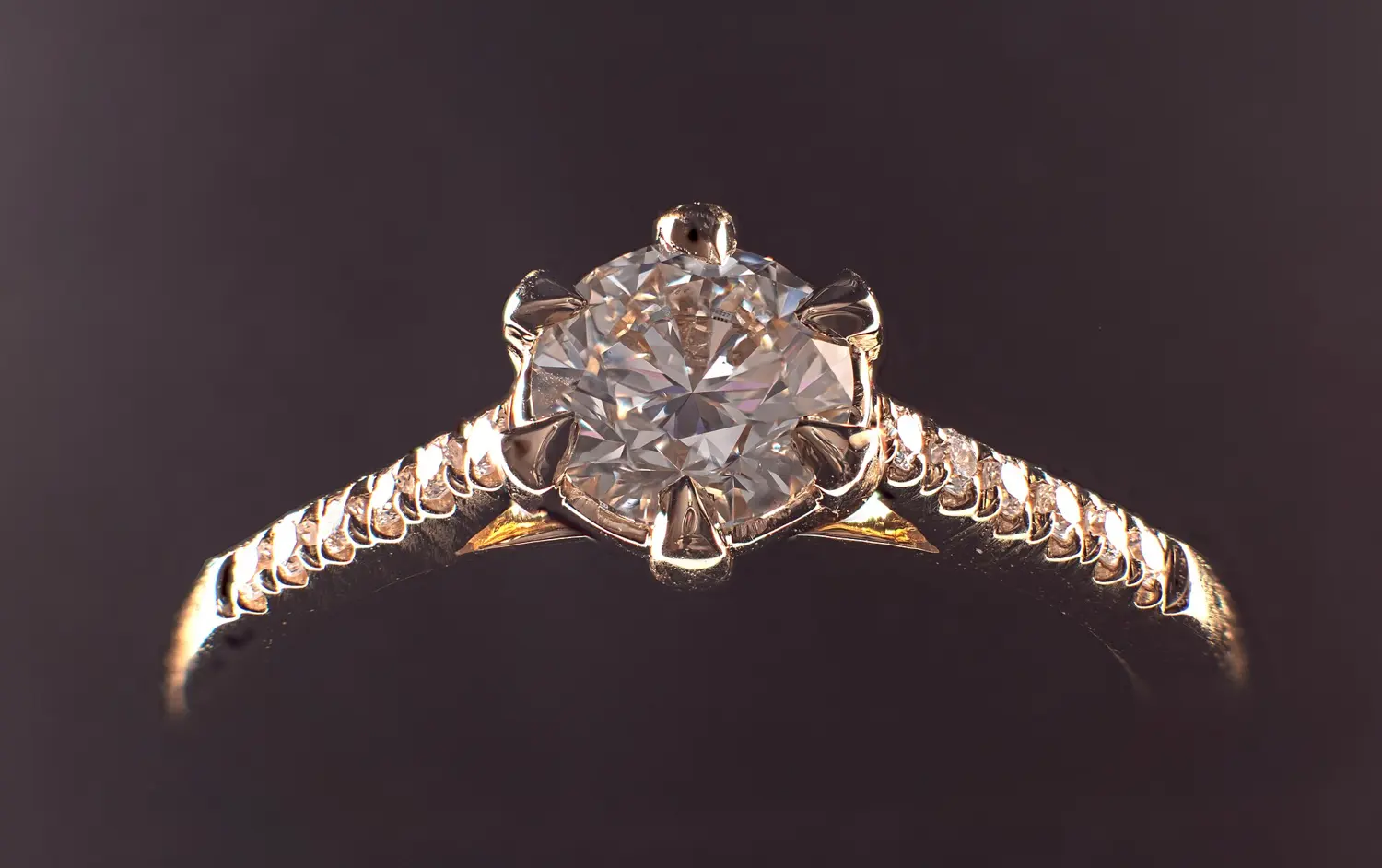
The piece is photographed as if for a magazine, with a single line of description. Google, which can't see the sparkle of a sapphire, has nothing to go on.
Home / Industries / Jewellery
Jewellery is rarely an impulse buy, and almost never bought without research. Your customer compares stones, metals and workshops for weeks before walking through a door or filling a basket. If you don't show up during those weeks, they arrive at someone else's, mind already made up.
15 years in SEO
4 books on SEO and GEO
200+ sites tracked every day
1M / month visits to my e-commerce site
They trusted me with their visibility
 Darty
Darty Eurofins
 Cegid
Cegid EBP
EBP CNP Assurances
 Ingram Micro
Your result, as seen by someone looking for a ring
Someone is looking for a handmade engagement ring. Your workshop appears, third in line, with a title that says “Shop” and a description about elegance. Nothing says you make things. Say it.
Fig. 1. Three results for a ring. Only one of the three knows how to make it. (Weeks of work at the bench, summed up by the word “Shop”.)
What this means for you. I rewrite your titles with what your competitors can't write: made in the workshop, the stones, the bespoke work.
SEO for jewellers is the search optimisation of a shop, a workshop or an online store for searches about a piece of jewellery: an occasion, a stone, a metal, a bespoke creation, a repair. It relies on precise collection pages and product pages, on carefully made and described images, and on the Google Business Profile for those who welcome customers in store. Its particular difficulty is giving Google enough text and facts without spoiling the tone of the house.
The problem
The piece is photographed as if for a magazine, with a single line of description. Google, which can't see the sparkle of a sapphire, has nothing to go on.
The ring is sold, its page is deleted, and what little ranking it had earned goes with it. With every sale, the site starts again from scratch.
For “gold ring” or “silver necklace”, they fill the page with thousands of products. An independent won't dislodge them head-on; they win alongside, on what the big players describe badly.
An audit, for real
The site below doesn't exist, but its flaws do: they're the five I spot most often. Hover over a number.
Welcome to our world
Elegance and refinement for your most beautiful moments.
DiscoverFig. 2. Fictional site, reconstructed. Any resemblance to yours would be a good reason to call me.
What your customers type
These six examples are plausible illustrations, not measured data. They show very different intents, each calling for a different page.
What works
People search by type of jewellery, by metal, by stone, by occasion. If your site only sorts its pieces by collection name, it can't be found by anyone who doesn't know the house yet. Both ways of sorting can live side by side without bothering the visitor.
Metal, hallmark, stone, size, weight, dimensions, care, lead time. These are the questions people ask at the counter, and an online customer has nobody to ask. A complete product page reassures, and it gives search engines what they need to understand the piece.
In this trade, part of the searching happens directly in image results. Light, properly named files, described by precise alt text, and a photo of the piece being worn as well as the one on a white background: it's little work per piece, and it adds up across the whole catalogue.
How to choose a stone, why one setting holds better than another, how to look after antique jewellery. These pages, signed by whoever sits at the bench, attract people doing their research before they buy, and no big chain can write them for you.
For a physical shop, it brings in store visits and phone calls. Reviews count double there, because people read about the welcome and the after-sales service as much as the beauty of the pieces.
What costs dearly
Better to keep it, marked as sold, with links to similar creations or to bespoke work. It keeps bringing in visitors who were looking for exactly that.
For the brands you stock, every retailer shows the same paragraph. Three sentences of your own, on how it wears and what you think of it, are enough to stand apart.
The account looks superb, and it belongs to you less than you think. A social network shows your pieces to people who already follow you; it doesn't answer the person looking for a wedding band on a Sunday evening.
For high jewellery, that's defensible. For everything else, having no reference point at all drives visitors away, as they assume it's out of their reach.
The method
I run an online shop myself, France Minéraux, my own minerals shop, set up with my wife. I make the trade-offs between image and text every week at home.
One-minute test
Five frank questions to find out whether support makes sense in your situation. Sometimes the answer is no, and I'll tell you.
What it brings in
A ranking doesn't pay a salary. What counts is what it brings: enquiries, customers, revenue. Move your page up and see what it could bring in.
Example assumptions, open to challenge: 900 searches a month for a bespoke ring, 2% of visitors make an enquiry, one enquiry in three is signed (this varies a lot from one trade to another), €1,800 per customer. Click-through rates by position are orders of magnitude, and they've been shifting since Google started showing AI answers above the results. Redo the calculation with your own figures
Possible revenue€0
Close to home
In Charente, a jeweller may be a town-centre shop, in Angoulême or Cognac, or a designer's workshop selling online and at fairs. In Cognac, the brandy trade and its packaging industry, bottles, cases, gift boxes, also brings in passing visitors. The two profiles don't need the same SEO work. I'll tell you which one you are, and sometimes it's both.
It lives off its regulars and searches made a few streets away. Its priority is Google Maps, with accurate opening hours and reviews that mention the welcome.
Their address matters little, their name and style a great deal. They target national searches about a stone, a technique or a type of piece, and Charente becomes part of their story.
A visitor who came for the cognac houses may look for a gift or a valuable keepsake while there. A Google Business Profile readable in English and a page saying what they'll find at yours can be enough to bring them in.


Beyond Google
Questions put to AI tools are long and personal: “I'm looking for an engagement ring with a sapphire, fairly understated, made in France. What do you recommend?”. The answer explains the criteria, then suggests a few workshops or shops. The customer then turns up at yours with an idea already formed, or doesn't turn up at all.
To make that short list, the AI needs to know exactly who you are: what you make or stock, in which materials, where, for what kind of order. A vague “The house” page doesn't help it; a factual description, repeated word for word on your Google Business Profile, in the press and on your partners' sites, does. Guides signed by the workshop help too, because AI tools like ChatGPT, Gemini, Claude or Mistral are happy to reuse a clear explanation and cite its source.
Question put to an AII'm looking for an engagement ring with a sapphire, fairly understated, made in France. What do you recommend?
Three places match your request:
Fig. 3. Reconstruction, names hidden. This is the spot we aim for: on the list, with the most precise description.
Three typical cases
Typical cases, made up to show where I start. None of them is a real client.
They have loyal regulars and see few new faces.
Their sales depend on social media and a handful of fairs a year.
It stocks brands that plenty of other sites sell too.
In practice
Pricing
The fee depends on four things. I give you a precise amount after a free first thirty-minute conversation.
Fancy a game?
The big chain has sat up there for years, hogging every click. Grab the piece and slide it into the slot.
INSERT COINSLIDE THE COIN INTO THE SLOT
Fig. 4. Sixteen seconds to topple a giant.
Together, let's devour your competitors.
One by one, and in order. Every spot gained makes the next one easier to take: that's why it keeps growing. See the method

Who you're talking to
My name is Kévin Papot. More than fifteen years in the job, four co-written books, and the Newp agency, co-founded in Charente. I also run my own online shops, in France and internationally: one of them went from zero to a million visits a month.
Before we talk tags, we talk margin, average basket and profitability. When you book a call, I'm the one who picks up.




FAQ
No. The text Google needs is facts: metal, stone, dimensions, how it's made. You can give them elegantly, in the house's own voice. What cheapens a site is mechanical keyword repetition, and I don't do that.
It shouldn't disappear. A sold piece stays online as a reference and points to similar creations or to bespoke orders. And it's mostly the lasting collection pages that carry the SEO.
Not on the broadest searches, where their catalogue and brand recognition weigh too much. Very well on precise searches: a stone, a technique, bespoke work, a town. Those are often the ones where the customer has most made up their mind.
Yes, even without online sales. Many customers look at what you offer before making the trip. A site that shows your pieces and services, plus a well-kept Google Business Profile, fills the shop.
Yes, visibly. These are things buyers look for before paying, especially online. You tell me what applies to your pieces, and I make sure the product page shows it unambiguously.
Because the two don't reach the same people at the same moment. Instagram helps people discover you; Google answers someone who's already looking, often with a budget and a date. The second complements the first, it doesn't replace it.
Yes. With my wife, I built France Minéraux, my own minerals shop, which started from nothing and reached a million visits a month. Catalogue, photos, product pages, seasons: I know these topics as a retailer, not just as an adviser.
Well in advance. An occasion page needs time to rank, and it's kept from one year to the next instead of being recreated. We set a calendar right at the start of our work together.
It's common in this trade, and it costs sales on mobile. An image can be made much lighter without the eye seeing any difference. It's usually one of the first fixes.
Yes. I rolled my own shop out to Spain and internationally, with everything that involves in translation, structure and delivery. We start with a single country, the one where you already sell a little.
See also
30 minutes · video call · with me
Together we look at where you stand on Google and in AI, and what should change first.

