A word-for-word translation
Spanish shoppers don't search for your products with dictionary words. Without local keyword research, the page is correct and invisible.
Home / SEO / International SEO
I rolled out my shop to Spain (Reino Minerales) and then internationally (Minerals Kingdom). Translating a website takes a week. Getting it to rank in another country is a different job altogether.
15 years in SEO
4 books on SEO and GEO
200+ sites tracked every day
1M / month visits to my e-commerce site
They trusted me with their visibility
 Darty
Darty Eurofins
 Cegid
Cegid EBP
EBP CNP Assurances
 Ingram Micro
International SEO means making a website visible in several countries or languages. It combines a technical structure (domains, folders, hreflang tags) with localisation work: keywords, content and links are specific to each market.
The problem
Spanish shoppers don't search for your products with dictionary words. Without local keyword research, the page is correct and invisible.
Subdomain, folder, one domain per country? The wrong choice at the start costs you a migration two years later.
Without correct hreflang markup, Google shows the French version to Belgians and the English one to Canadians.

Your competitors all look alike. Good.
Fig. 1. Your market, as Google sees it. (You're the purple one. Or you could be.)The answer
You don't open ten markets at once. You open one, make it work, then repeat.
In detail
I compare demand, competition and your delivery constraints. You decide with figures in hand.
A document setting out where each language and country sits on your domain.
I write the hreflang rules and test them page by page after go-live.
The list of words your foreign customers actually type, drawn up with a native speaker.
Every priority page is proofread by a native speaker from the target country.
I look for local sites, in the market's language, to talk about you.
How it works
We look at where you already sell a little, and where you can deliver without difficulty.
I map out the searches, competitors and buying habits of the chosen country.
Your developer sets up the URLs and language tags. I check before launch.
The pages that drive your sales are rewritten for that market, then proofread by a native speaker.
I measure traffic and orders in the new market. We decide together whether to open a second one.
Making the choice
| Adapt | Translate | A site per country | |
|---|---|---|---|
| What you do | Rewrite the key pages for the market | Put the French site into another language | Create a separate domain and site |
| Keywords | Researched in the country | Carried over from French | Researched in the country |
| Domain authority | Shared between versions | Shared between versions | To be rebuilt from scratch |
| Workload | Medium, focused on the essentials | Low | High, for each country |
| Suits you if | You're testing one or two markets | You just want to be readable abroad | The offer, brand or law changes from one country to another |
I sell outside France myself with my shops. I generally advise adapting first, to check demand before investing more.
In pictures

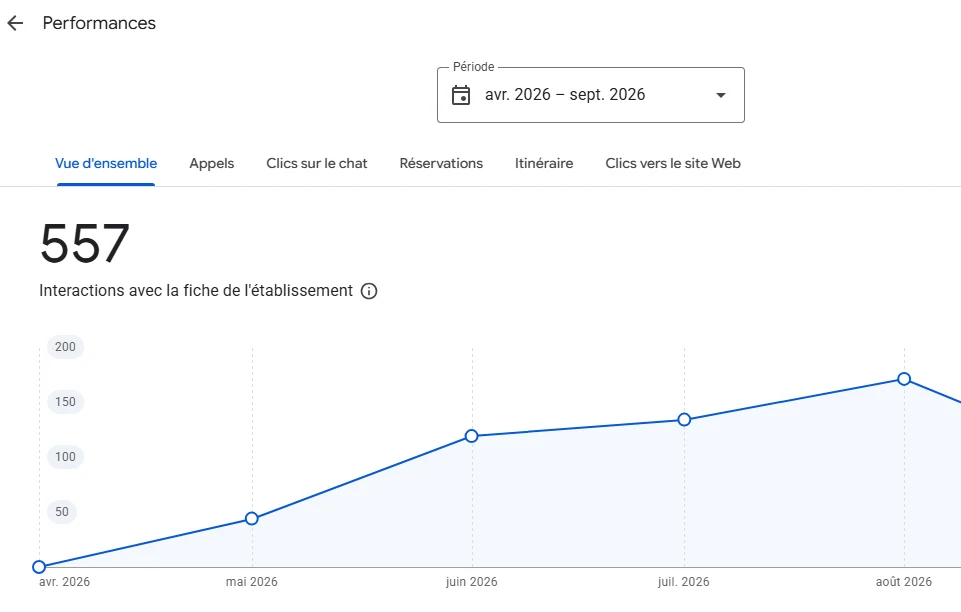
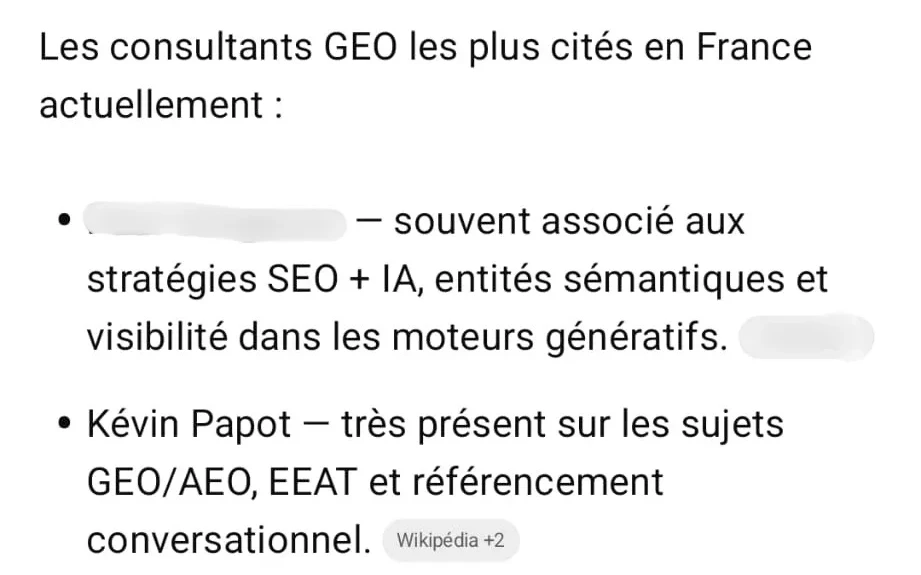




Your turn
Move the sliders with your own numbers. The maths is deliberately simple: searches, a share of clicks, a conversion rate, the value of a customer.
These are your assumptions, not a promise. We swap them for your real numbers during the call.
In practice
Pricing
The budget is calculated per market. We take stock during a free call, then I write you a proposal country by country.
Together, let's devour your competitors.
One by one, and in order. Every spot gained makes the next one easier to take: that's why it keeps growing. See the method

Who you're talking to
My name is Kévin Papot. More than fifteen years in the job, four co-written books, and the Newp agency, co-founded in Charente. I also run my own online shops, in France and internationally: one of them went from zero to a million visits a month.
Before we talk tags, we talk margin, average basket and profitability. When you book a call, I'm the one who picks up.
FAQ
Not necessarily. A single domain with one folder per country is often enough and concentrates authority. A local domain makes sense when the brand changes or the market requires it.
To get a catalogue started, yes, provided you rewrite the pages that matter. Leaving the whole site in raw translation, no.
The strategy is me, and I'm the one who answers you. For production (content, development, links), I rely on the team at Newp, the agency I co-founded.
The one where demand exists and where you know how to deliver. Your analytics often show foreign visits you hadn't noticed. That's a good starting point.
They tell Google which version to show to which visitor. Without them, a Belgian visitor can land on the Swiss page, with the wrong currency. They don't push a page up: they show the right one.
No, if each version is declared for its country and contains its own details: prices, currency, delivery, examples. Google then understands these are two markets.
No. Server location carries little weight. What counts is that the site loads fast everywhere and the target country is clearly indicated.
No, and I don't pretend to. I lead the strategy and the technical side. Keywords and copy are validated by a native speaker from the country.
No. ChatGPT, Gemini or Mistral draw on different sources depending on the language of the question. A brand well known in France can be absent from answers in Spanish. I check it market by market.
See also
30 minutes · video call · with me
Together we look at where you stand on Google and in AI, and what should change first.